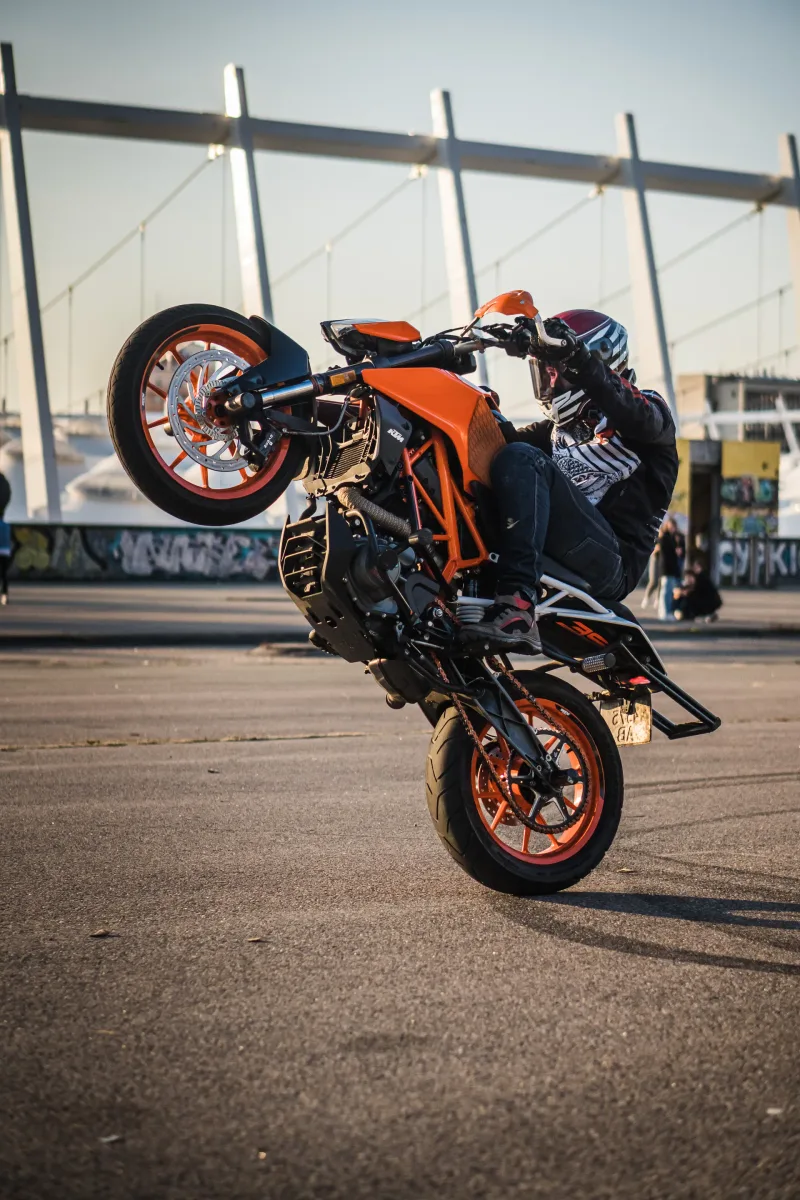
“How to Brake a Motorcycle from 60 mph: Master Emergency Braking Techniques”
Picture this: you're cruising at 60 mph, enjoying the ride. A truck pulls out in front of you. Panic sets in — you slam the brakes. The rear wheel skids, the front locks, and in an instant you're sliding sideways. Later you hear the classic line: «I had no choice but to lay the bike down.»
Reality check #1: you didn't lay it down. You lost control because you didn't know how to brake. And you're not alone — most riders don't.
Reality check #2: most riders know exactly how fast their bike gets from 0 to 60 mph. Ask them how long it takes to stop from 60 mph, and they'll guess 7 seconds. The real answer, done right, is 2.5.
Why most riders fail at emergency braking
1. Fear of the brakes
Riders avoid hard braking out of fear. Locking the front wheel or popping a stoppie terrifies them, so they never practice.
2. Panic slamming
Slamming the front brake locks the wheel or trips ABS too early — both cut braking efficiency. Slamming the rear does the same and throws the bike into a skid.
3. Soft brake habits
Years of gentle city braking condition riders to brake softly. The habit fails catastrophically in an emergency.
4. Clutch reflex
Pulling the clutch the moment you brake is a reflex for many riders. It adds 25–30% to your stopping distance — enough to turn a near miss into a crash.
In a critical situation, small mistakes cost everything. Emergency braking isn't optional — it's the most important skill you'll ever master.
The ideal emergency braking technique
1. Front brake
- Close the throttle and start applying the front brake at the same moment.
- Begin with ~30% pressure for 0.3–0.5 seconds to compress the suspension and spread the tire's contact patch.
- Ramp up to ~70% — stop short of the rear wheel lifting.
2. Monitor ABS and road feedback
If the front ABS kicks in, back off slightly to stay below the activation threshold. The goal is maximum braking without relying on ABS.
3. Rear brake
Gentle, steady pressure, applied together with the front. Don't lock the rear or trip rear ABS — it tanks your braking efficiency.
4. Body position
- Straighten your body and shift your hips back to counter forward weight transfer.
- Clamp the tank with your knees. Keep your arms relaxed.
- Don't lean on the bars — you're loading the front fork and inviting a stoppie.
5. Clutch management
Keep the clutch engaged while braking. Pull it only to downshift or as you come to a complete stop.
6. Downshifting
From higher speeds (4th gear or above), shift down progressively as you brake.
My simplified personal method
Stress changes everything. Fine motor skills — gone. Muscle memory — compromised. When your life is on the line, simple wins.
Why I ignore the rear brake in emergencies:
- Modulating rear brake pressure with your foot under high stress is nearly impossible.
- Rear ABS activation pulls your attention off the front brake.
- When braking hard, ~95% of stopping power comes from the front wheel. The rear barely contributes, especially during a mini-stoppie.
My 4-step simplified braking
- Two fingers on the front brake. Always. Saves up to 0.3 seconds — time that could save your life.
- 100% focus on the front brake. Compress the suspension quickly (0.3 seconds), then brake hard. Adjust for ABS or uneven surfaces.
- Ignore the rear brake. Rear ABS is a distraction from managing the front.
- Don't pull the clutch. Let the engine help stabilize the bike. Pull only to downshift or stop.
When the rear brake matters more
On wet, dirty, or uneven roads:
- Reduce front brake pressure and lean more on the rear for stability.
- On long-wheelbase bikes (cruisers, tourers) rear braking plays a bigger role.
Why riders don't train for emergency braking
- Fear: «What if I lock the front wheel?»
- Denial: «It won't happen to me.»
- Laziness: training isn't as exciting as riding fast.
How to practice emergency braking
- Find a safe area. An empty parking lot or a quiet rural road.
- Set targets. From 40 mph, aim to stop within 40 ft (12 m). From 60 mph, aim for 110 ft (32–33 m).
- Start slow. Light braking first. Build pressure as confidence grows.
- Practice in rain. Train on wet surfaces to learn how grip and stopping distances change.
What you'll gain
- Confidence — you'll know exactly how to stop in 2.5 seconds.
- Safety — drastically lower your risk in emergencies.
- Control — master your bike's braking and ride with peace of mind.
FAQs
How do I stop a motorcycle in an emergency?
Master progressive braking and clutch control. Brake hard with the front, keep the clutch engaged, stay relaxed.
Why do riders grab the clutch during braking?
Bad habit from poor training. It removes engine braking and stretches stopping distance.
Is ABS a substitute for proper technique?
No. ABS supports — it doesn't replace — good braking skill.
What's the best body position for braking?
Straight body, weight back, knees clamping the tank, arms relaxed.
How does rain affect braking?
Lower grip, longer stopping distance. Lean more on the rear brake and brake smoother.
Braking isn't just a skill — it's survival. Train now, ride safer forever.
Liked it? Share with fellow riders
Nebachiv Book and App — in progress
Get early accessRead more
Why New Riders Crash in Corners—and How You Can Avoid Their Mistakes
Learn why new riders crash in corners and how to avoid their mistakes. Master leaning, trail braking, and wide trajectories to stay safe and in control on any curve.
Why Do New Riders Fear Corners? My Journey and Lessons for Mastering Turns
Discover why new riders fear corners and how to overcome it. Personal stories, gymkhana, track, and pit bike training tips to master every turn with confidence.

Common Lane-Splitting Mistakes New Riders Make (And How to Fix Them)
Discover common lane-splitting mistakes new riders make and how to avoid them. Learn slow-speed control, smart positioning, and blocker awareness for safer, stress-free riding.
«8 Common Braking Mistakes That Most Motorcyclists Make—And How to Avoid Them»
Discover the top 8 braking mistakes motorcyclists make and how to fix them. Learn techniques to master emergency braking and reduce your risk of accidents.