Motorcycle Safety Glossary
Dictionary of motorcycle safety terms — crashes, techniques, hazards, equipment and rider mindset.
The Nebachiv Glossary covers 50+ motorcycle safety terms with explanations, examples, and video. Every term is written from real crash analysis and years of riding experience.
50 terms
ABS (Anti-lock Braking)
A system that prevents wheel lockup during braking — allowing you to maintain control and steering.
Absolute Responsibility
The principle: you are responsible for EVERYTHING that happens to you on the road — even when you're not legally at fault.
ATGATT
The principle of wearing full protective gear on every ride. Helmet, jacket, gloves, pants, boots — even for short trips.
Car Door Opening
A driver or passenger opens a parked car door directly into a motorcyclist's path.
Chain Reaction
One event triggers a series of crashes — each participant's reaction creates a new hazard.
Clutch Control
Smooth clutch management for power control — essential for maneuvering and starting.
Concentration
Full presence in the moment of riding — no phone, no daydreaming, no autopilot.
Counter-steering
Push right to go left. The fundamental physics of motorcycle steering at speed.
Crash Cage / Engine Guard
A protective frame structure that absorbs impact during a fall instead of the engine and bodywork.
Ego Riding
Riding to impress others or prove yourself — one of the leading causes of fatal crashes.
Emergency Braking
Stopping the motorcycle as quickly as possible in a critical situation. The skill that saves lives.
Enduro
Riding a motorcycle off-road — dirt, rocks, forest, water. A different skill set and risk profile.
Engine Braking
Slowing down through engine compression with the throttle closed — no brakes needed.
Head Turn Technique
Where you look is where you go. Turn your head through the corner, don't stare at the front wheel.
Head-on Collision
A frontal collision between two vehicles traveling in opposite directions. The deadliest crash type — speeds combine.
Helmet Types
An overview of motorcycle helmet types — from full-face to open. Each type offers a different protection level.
High-beam Usage
Proper use of high beams — for nighttime visibility and as a daytime presence signal.
Highside
A violent ejection over the top of the motorcycle — one of the most dangerous motorcycle crashes.
Lane Positioning
Choosing the right position within your lane for maximum visibility and safety — left, center, or right third.
Lane Splitting
Riding between rows of traffic — a common practice that demands heightened awareness.
Left Turn Danger
A car turns left across your path — the most common type of motorcycle collision.
Look Far Ahead
Look 12-15 seconds ahead — this gives you time for decisions and smooth riding.
Lowside
The motorcycle slides out and falls to the inside of the turn. Less violent than a highside but far more common.
Pattern Recognition
The ability to recognize dangerous situations before they become crashes — the core of the Nebachiv philosophy.
Perception Error
Misjudging speed, distance, or the intention of another road user. The number one cause of crashes.
Progressive Braking
Gradually increasing brake pressure from light to firm. The foundation of safe braking.
Rear-end Collision
A vehicle strikes a motorcyclist from behind — at traffic lights, in traffic, or during sudden stops.
Rev Matching / Blipping
A quick throttle blip during downshifts to match engine RPM for smooth transitions.
Riding Jacket
An armored jacket for motorcycle riding — protection from abrasion, impact, and weather.
Road Rage
Aggressive behavior on the road — from cutting off to deliberate pursuit. The motorcyclist always loses.
Single Vehicle Crash
A crash involving only the motorcycle. Over half of fatal motorcycle crashes are single-vehicle incidents.
Slippery Surface
A road surface with reduced grip — wet asphalt, paint lines, oil, sand, leaves.
Slow Speed Maneuvering
Controlling the motorcycle at walking speed — U-turns, parking, and filtering through traffic.
Stoppie
Flipping over the front wheel from excessive front brake force. The rear wheel lifts off the ground.
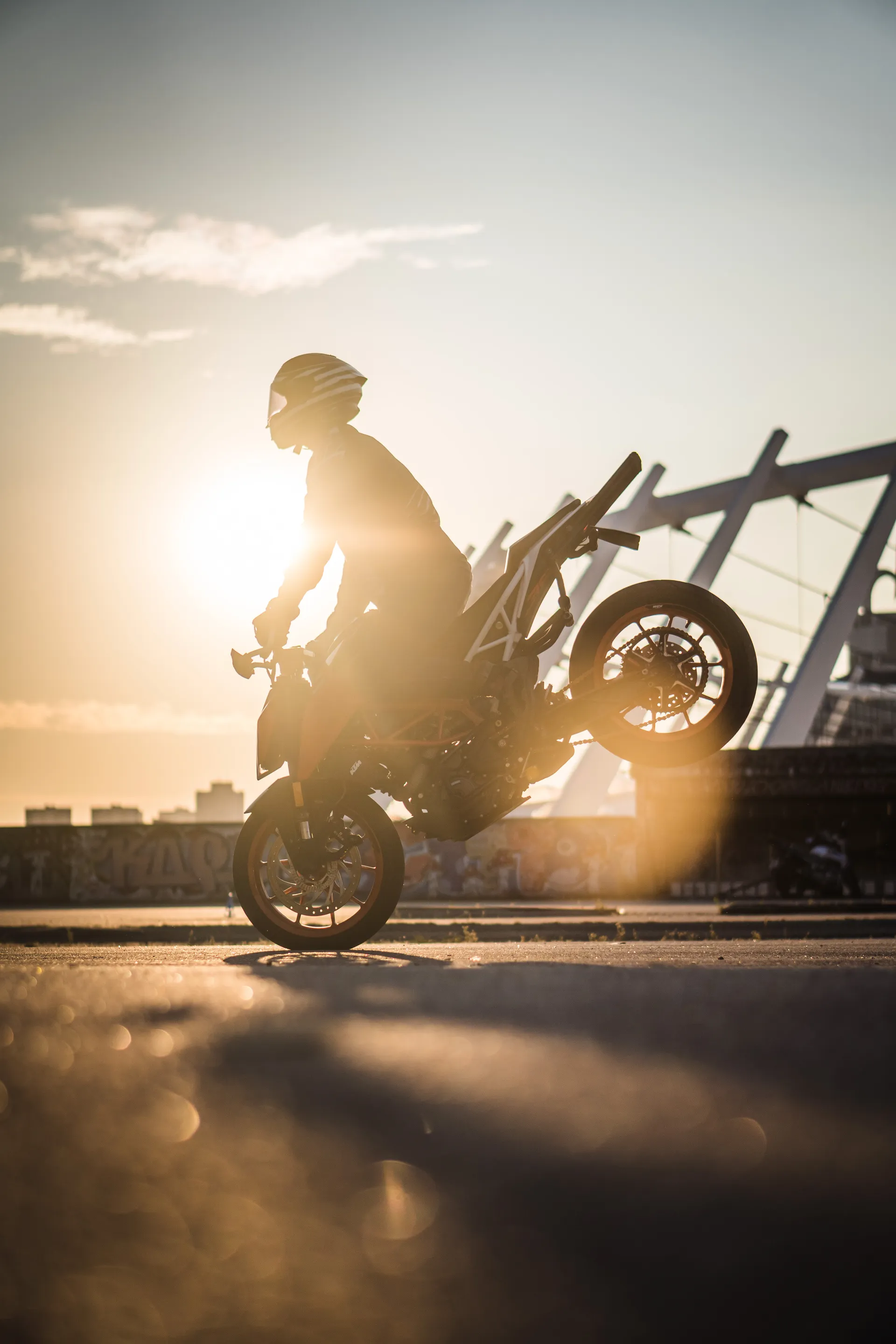
Stunt Riding
Performing tricks on a motorcycle — wheelies, stoppies, burnouts, drifts. High risk without proper preparation.
T-Bone Collision
A right-angle collision where one vehicle strikes the side of another. Extremely dangerous for motorcyclists.
Tank Slapper / Wobble
Uncontrollable handlebar oscillation at speed — the bars violently slap side to side.
Target Fixation
Involuntarily staring at an obstacle instead of the safe path — and riding straight into it.
Throttle Control
Smooth and precise throttle input — the foundation of safe motorcycle riding.
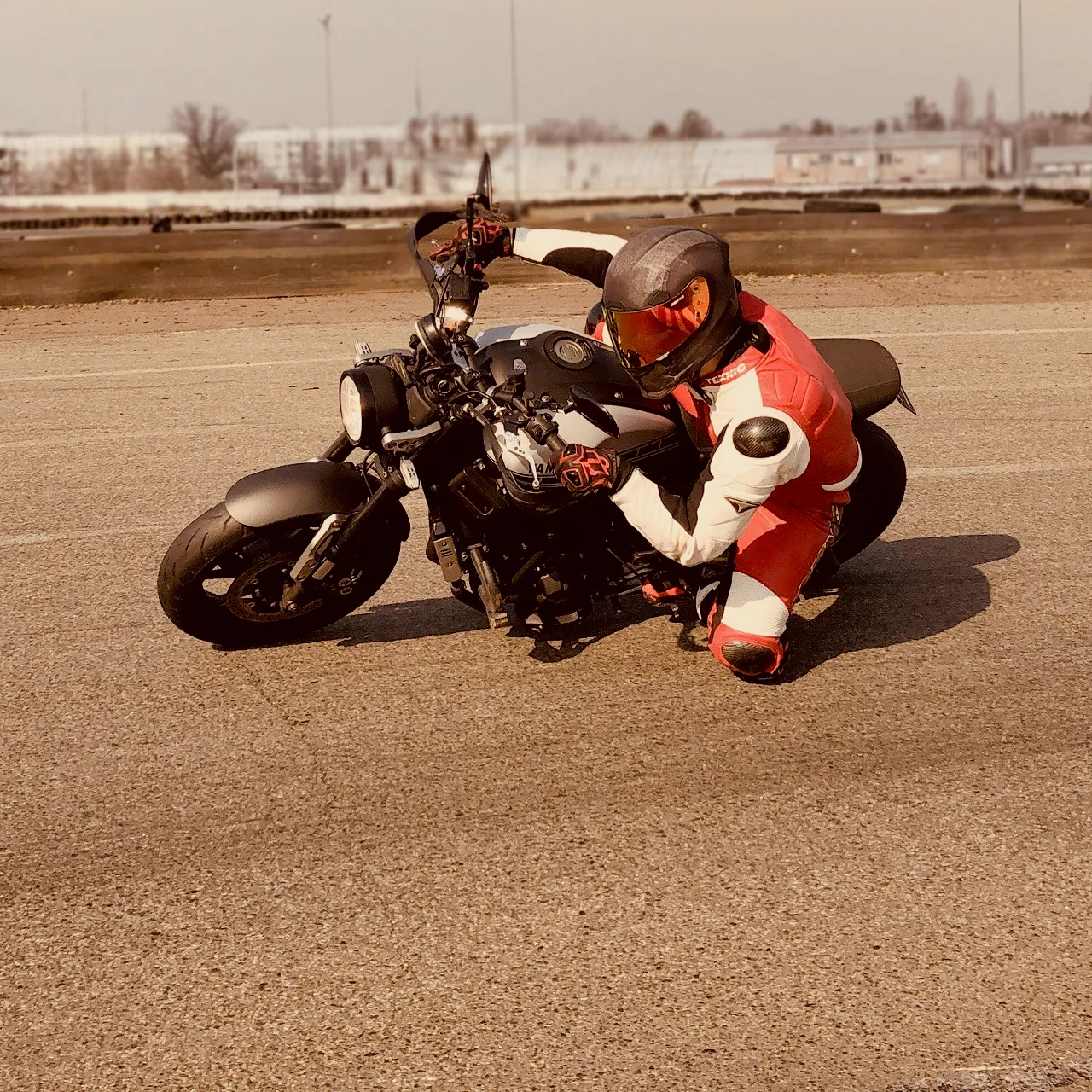
Track Riding
Riding on a closed circuit — the safest way to develop high-speed skills without road hazards.
Trail Braking
The technique of continuing to brake while entering a corner — gradually releasing the brake as lean increases.
Liked it? Share with fellow riders
Nebachiv Book and App — in progress
Get early accessNext reading
For a New Rider
Hello! Are you looking to buy a bike? Or are you already studying at a motorcycle school and someone recommended Nebachiv? Or maybe you stumbled upon this project by accident? In any case — welcome! I know you probably have a lot of questions about motorcycles right now. Suddenly, you realize that it’s a vast […]