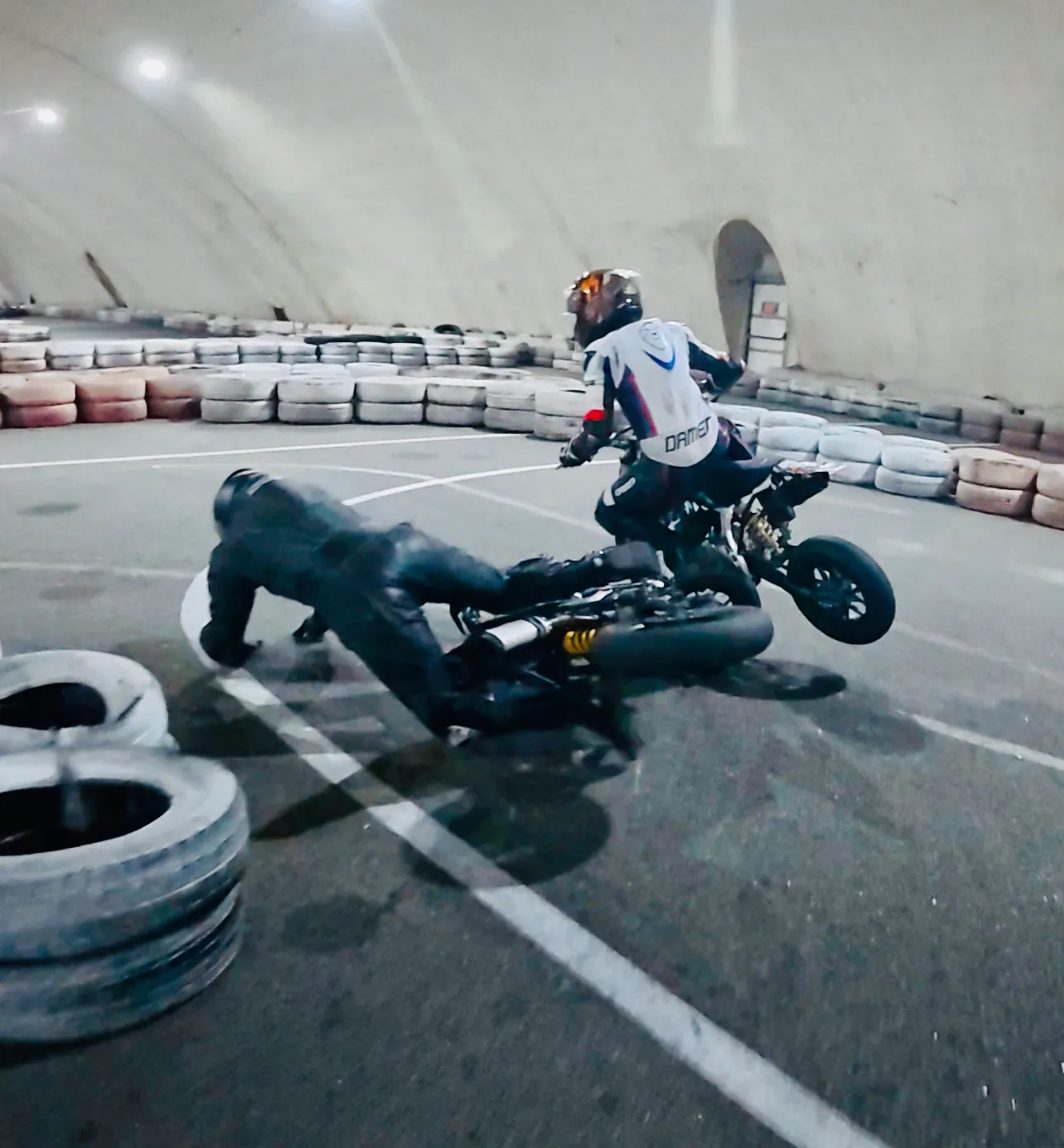
Low-Side vs High-Side: Why City Riders Crash in Corners
City riders with a few seasons behind them often feel confident, and on a twisty mountain road that confidence turns against them. The two typical crashes there are the low-side and the high-side. Here is what causes each one and what I'd practice to avoid them.
What's Happening?
In the city you rarely practice leaning the bike, so that skill stays untrained even after a few seasons. On a twisty road it shows up as a low-side or a high-side.
Scenario 1: The Low-Side
What is it?
A low-side happens when your bike loses traction at the rear wheel, leans too far, and drops onto its side. You and your motorcycle skid across the asphalt. While generally less dangerous than a high-side, a low-side can still be catastrophic if you hit a pole, barrier, or oncoming vehicle.
Why does it happen?
Tires have a limited grip that decreases as the lean angle increases. Common causes of low-sides:
- Over-leaning the motorcycle.
- Abrupt rear braking.
- Snapping the throttle.
- Slippery surfaces like sand, oil, or wet pavement.
How to avoid it?
- Avoid excessive lean angles.
- Be smooth with throttle and braking inputs.
- Pay attention to road conditions.
Scenario 2: The High-Side
What is it?
A high-side is far more dangerous. It occurs when the rear wheel slides and suddenly regains traction. The wheel suddenly finds grip, the suspension springs back, and it throws the rider off.
What does it look like?
You're airborne, and then you crash back down hard. Recovery from this kind of incident often takes months, and your bike likely won't fare much better.
Why does it happen?
- Loss of rear traction due to excessive lean, throttle, or braking.
- Abrupt correction: cutting the throttle or releasing the rear brake too quickly.
How to avoid it?
- If the rear wheel is sliding, maintain a steady throttle instead of closing it.
- Don't abruptly release the rear brake—smoothly regain control instead.
How to Avoid These Mistakes
- Learn Where Your Traction Limit Is
- Practice leaning on a closed track or on a pit bike.
- Learn your bike's limits at slower speeds.
- Always Keep a Safety Margin
- Leave room for error in your speed and your line.
- Remember: the risks on the road are far higher than on a track.
- Master Trail Braking
- Learn how to apply the front brake smoothly while cornering.
- Use progressive brake pressure to maintain stability.
- Be Aware of the Surface
- Avoid slippery road sections like wet paint, sand, or oil.
- Adjust your riding style to match the road conditions.
- Focus on the Exit
- Always look where you want to go, not at the obstacle.
FAQs
- What is a low-side in motorcycling?
It's when the bike loses rear traction and falls onto its side, causing the rider to slide with the bike. - Why do high-sides happen?
They occur when the rear wheel slides but then suddenly regains traction, throwing the rider off violently. - How can I avoid crashing on switchbacks?
Practice leaning, leave room for error, and learn trail braking to control your speed and line. - What should I do if my rear wheel starts sliding?
Maintain a steady throttle and avoid abrupt corrections like closing the throttle or releasing the rear brake. - Can I brake in a corner without crashing?
Yes, by using trail braking—a smooth, controlled application of the front brake while cornering. - How does road surface impact grip?
Slippery surfaces like oil, sand, or wet pavement reduce traction and increase the risk of crashes. - Why is practicing lean angles important?
It helps you understand your bike's limits, reducing the risk of low-sides caused by over-leaning. - What should I do if I lose control in a corner?
Focus on the exit, stay calm, and use gentle throttle and brake adjustments to regain stability. - What makes excessive leaning dangerous?
It reduces the available grip, making it easier to lose control. - Why is a safety margin essential on switchbacks?
It gives you time and space to correct mistakes, especially on unpredictable roads.
Low-sides and high-sides are easier to understand when you see them. In the Nebachiv app I break down corner crashes on real videos, and there are tests on recognizing how a crash starts.
App access opens in waves, in the order requests come in
Get early accessLiked it? Share with fellow riders
Read more
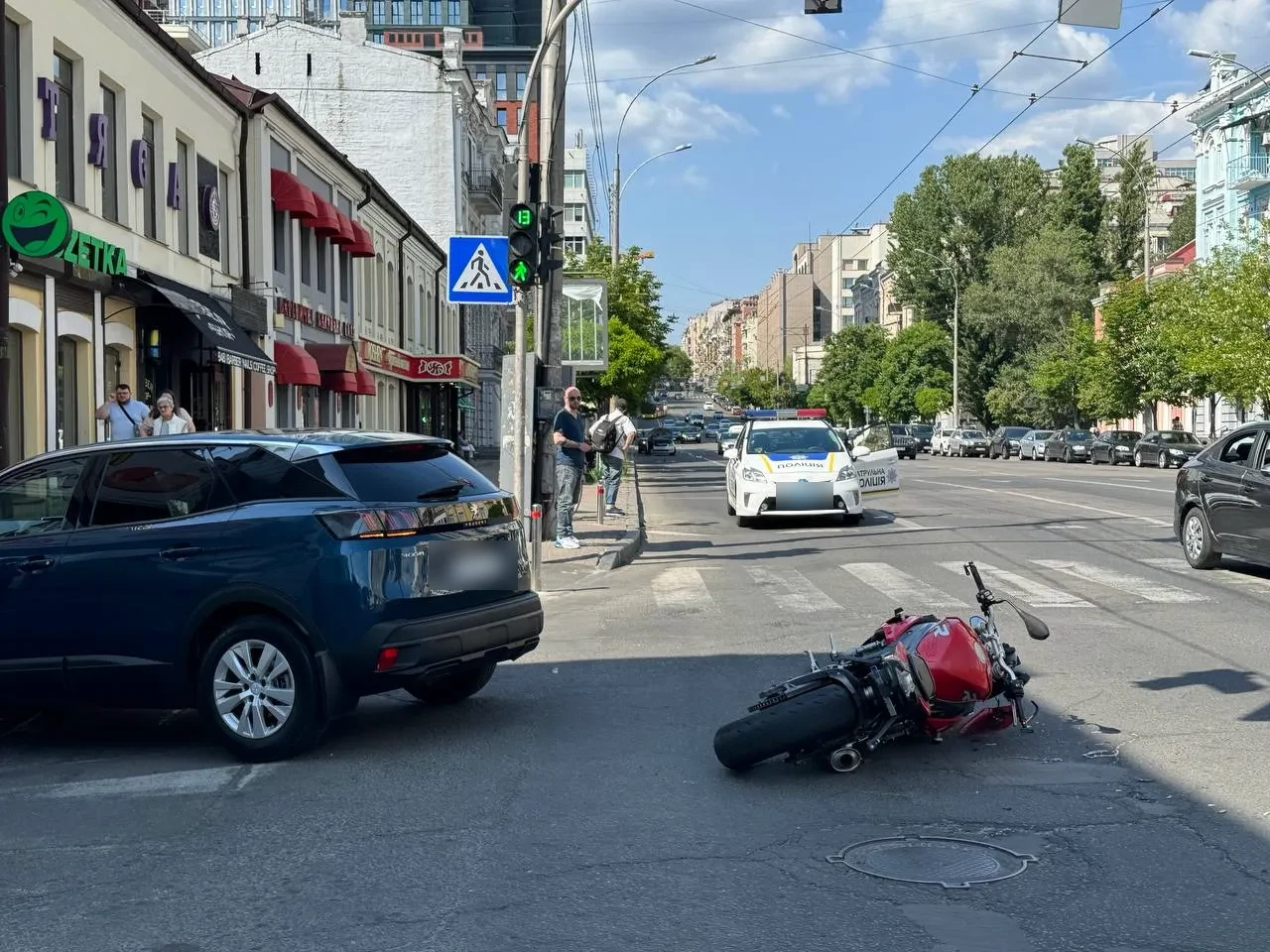
The Left-Turn Crash: How to Avoid the Most Common City Motorcycle Crash
What is the most dangerous city situation for a new motorcycle rider? Left turn with visibility blocker. Learn how to see them, avoid them, and ride smarter.
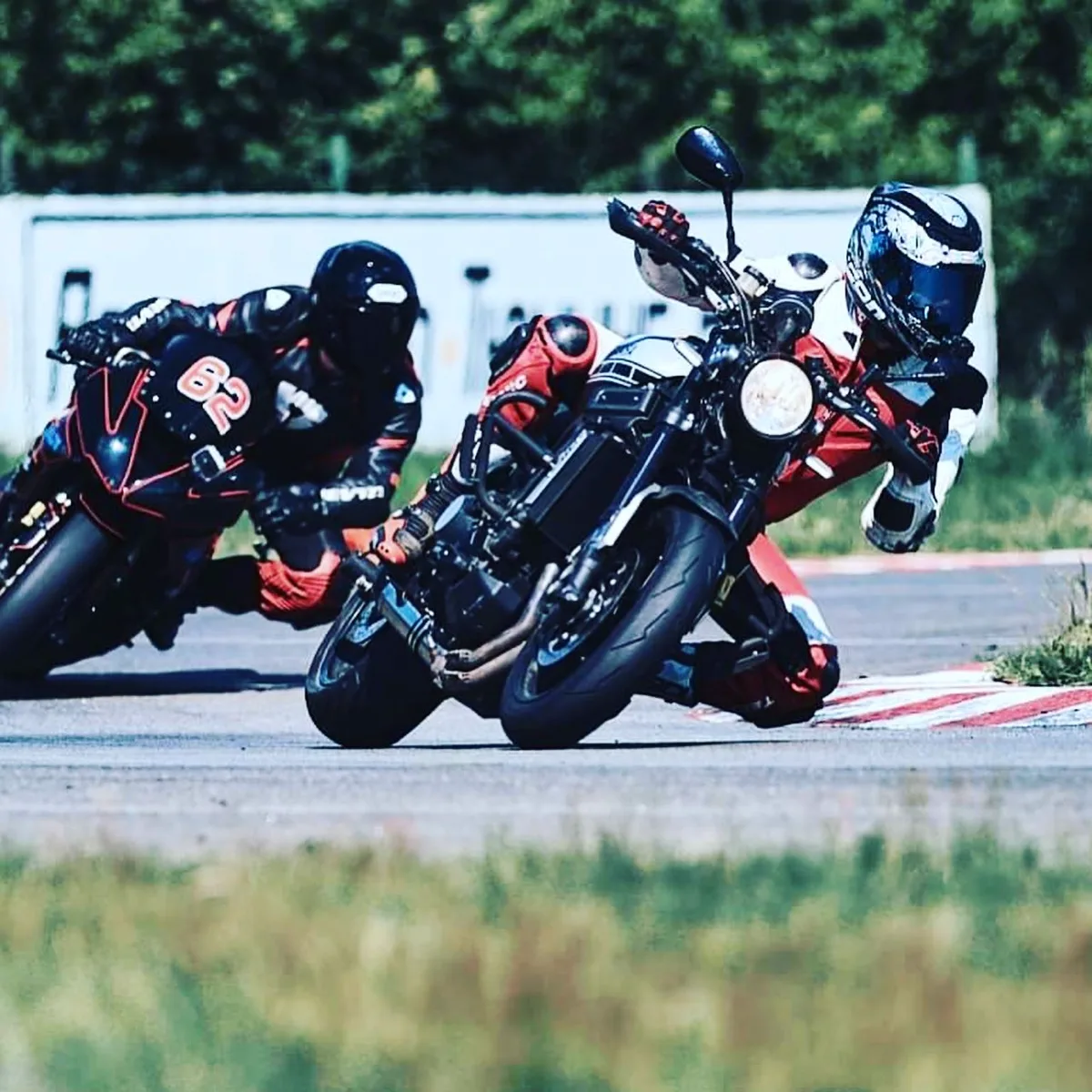
Why New Riders Crash in Corners—and How You Can Avoid Their Mistakes
Learn why new riders crash in corners and how to avoid their mistakes. Master leaning, trail braking, and wider lines to stay safe and in control on any curve.
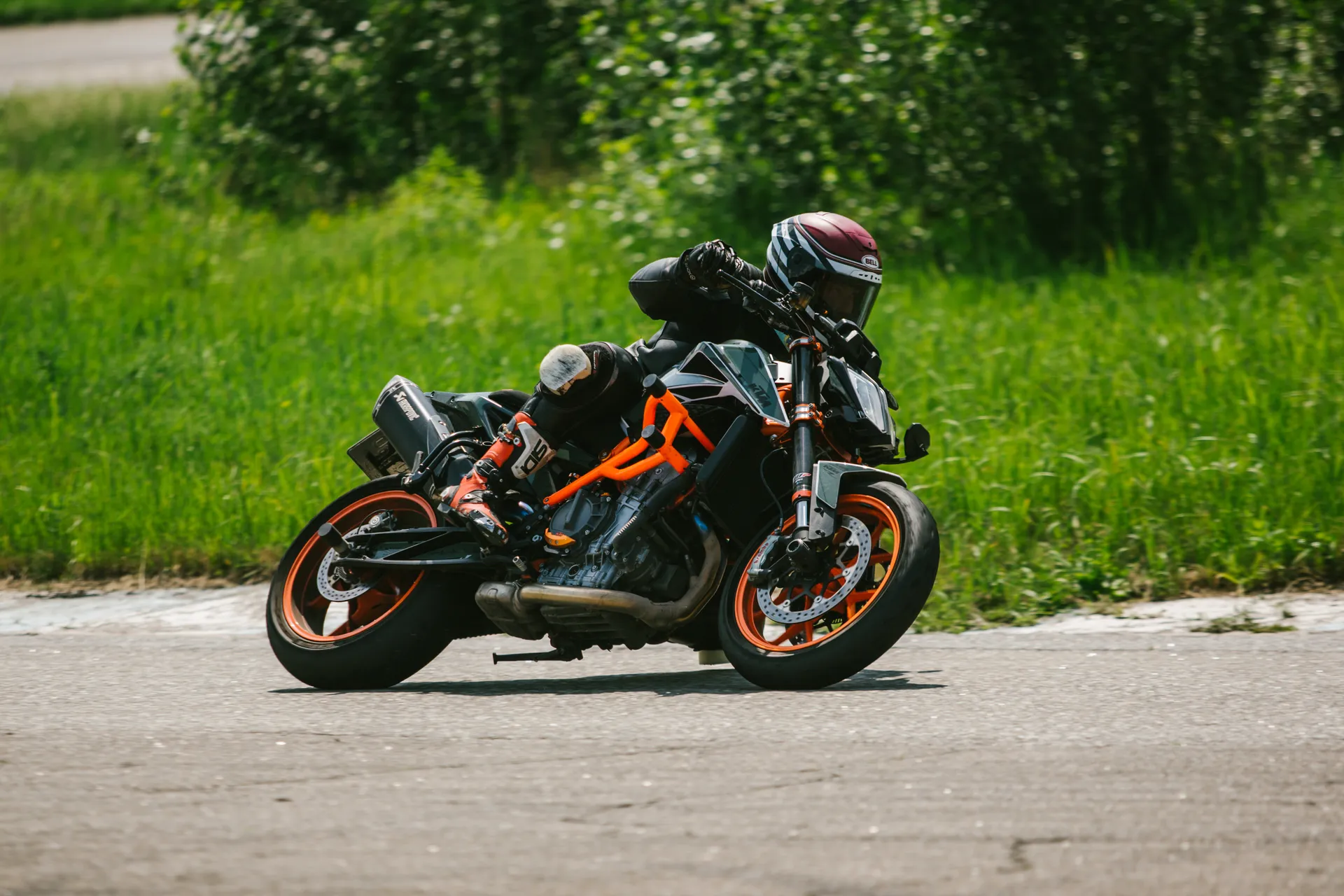
Slippery Road Surfaces for Motorcycles: Paint Lines, Manhole Covers, Gravel, Tram Tracks
Where a dry road gets slippery for a motorcycle: paint lines, manhole and drain covers, gravel, sand, tram tracks. Why the front washes out and what I do.