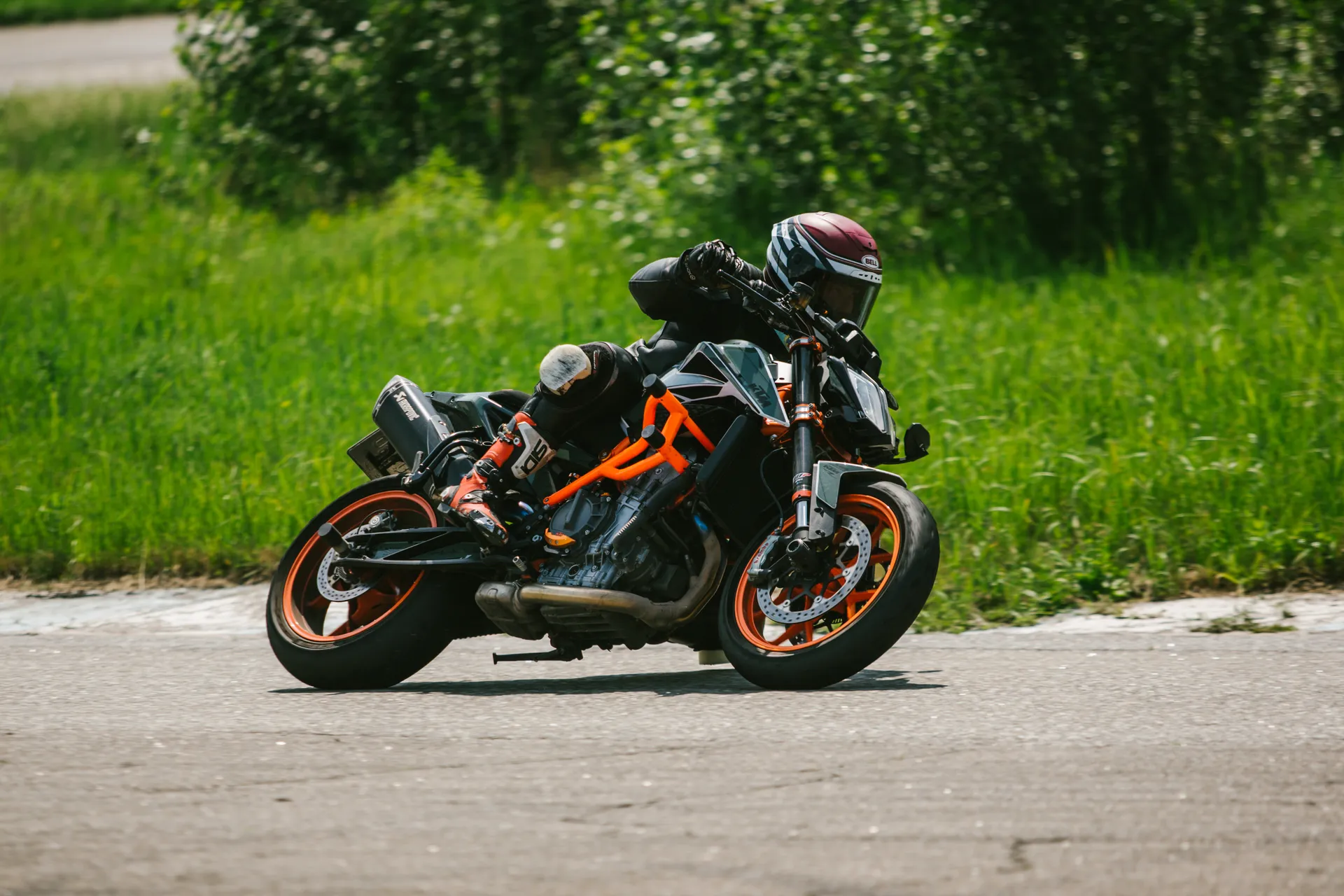
Slippery Road Surfaces for Motorcycles: Paint Lines, Manhole Covers, Gravel, Tram Tracks
A road can be slippery for a motorcycle without any rain. On dry pavement, grip is taken away by sand and dirt near the shoulder and in corners, loose gravel, paint lines, crosswalks, tar patches and metal manhole and drain covers, tram tracks, oil and fuel spills, and a cold surface. The slipperier it is, the smoother I am with the throttle and the brakes. I covered wet roads separately, in the article on riding in the rain.
Where a dry road is slippery
The shoulder. I assume the shoulder is always dirty, and I expect that in advance.
Sand, dirt, and gravel on the pavement. If there's sand or dirt on the pavement, or a truck has spilled gravel, that's a problem, and a much worse one than wavy pavement. On uneven, wavy pavement, grip under braking is very low too.
Paint lines, crosswalks, tar patches, and manhole covers. On dry pavement, paint lines, crosswalk stripes, and manhole covers are still slippery: by my own subjective feel, I'd say about a quarter slipperier. So on those surfaces I'm very careful with the brakes and with opening the throttle, and when I'm leaned over it's better not to ride onto them at all.
Tram tracks. Tram tracks are very slippery. On dry pavement they're slippery too, of course: you can tell from the fact that almost every rider has gone down on tram tracks at least once. I wrote about wet tracks in the article on riding in the rain.
Cold and spring. Cold pavement grips worse than warm pavement. In spring, after winter, the roads have been covered in sand, the snow is melting, and everything is coated in slippery mud, the shoulder most of all.
Corners. A corner can hide loose gravel, an oil patch, a change in the road surface. To me, every corner is a lottery with unknowns.
Why riders crash on slippery surfaces
Slipperiness affects both the throttle and the brakes. The slipperier it is, the more the braking balance shifts from the front wheel to the rear.
A very common beginner crash goes like this: he rolls up to the shoulder, grabs the front brake, and there's a bit of sand there. The same thing happens in a corner with barely any lean, and even on a straight: there's sand or dirt on the pavement, the rider doesn't understand what that means, and he squeezes the front hard. The front wheel is gone instantly, and he goes face-first into the pavement.
The second cause is simpler: riders don't watch the surface, ride onto something slippery, and go down.
How it ends
I've collected the stories of crashes on slippery surfaces in the article on why beginner riders crash.
Going face-first into the pavement after the front wheel washes out is, for me, one of the arguments for a full-face helmet: without one, the jaw and nose can be badly hurt.
Potholes and bumps deserve a separate mention. I understood how serious they are when I learned that the father of a woman I know was killed after hitting a pothole. I also have several friends who hit potholes and were badly hurt. Or you can simply take a very nasty hit to the spine.
What I do on a slippery surface
If the surface is outright slippery, I don't brake on it at all, or I brake very lightly with the rear. It's better to find a surface with grip and brake there: gently with the front and gently with the rear. If sand, dirt, or gravel covers the road in a continuous layer, I don't touch the front brake, only a light rear. If I'm already braking and a small patch, a strip of dirt, or a little sand comes up, I ride across it without letting go of the front. On a large tar patch or a big manhole cover I don't brake with the front. There's a separate article on the role of the rear: the rear brake on a motorcycle.
In a corner on a bad surface, loose gravel for example, I don't brake. I stand the bike up or reduce the lean, ride across, and brake once I'm out of the corner: when you're leaned over, it's hard to save yourself from a fall. I covered how beginners lose the bike in a lean in the article on why new riders crash in corners.
Before a pothole or a bump I stand up on the pegs to soften the hit to my back. The passenger should stand up too.
At night I avoid riding through unfamiliar areas when I can, or I ride slowly enough to have time to react. On bad pavement I stay behind a car and watch its headlights: a jump in the beam shows me a pothole or a bump ahead of time.
Where to train your eye for slippery surfaces ahead of time
When you see a slippery surface, you need to understand how the bike will behave on it. You can't understand that from theory.
I break down real crash and fall videos in the Nebachiv app. There's also a crash-prediction game: you watch a video and practice spotting the danger before it turns into a fall.
Frequently asked questions
How do you cross tram tracks on a motorcycle?
I cross tram tracks and manhole covers at a right angle. I don't use the front brake on them and I don't snap the throttle open. Tracks are slippery on dry pavement too, so when I'm leaned over it's better not to ride onto them. I'm especially careful where the rails stick up above the road surface.
Are paint lines and crosswalks slippery on dry pavement?
Yes, on dry pavement they're still slippery: by my own subjective feel, I'd say about a quarter slipperier. So I brake and open the throttle on them very carefully, and when I'm leaned over it's better not to ride onto them. I don't brake with the front on a large painted area. Wet, cold road markings are already like ice to me; more on that in the article on rain.
How do you ride over potholes and bad roads?
I stand up on the pegs before a pothole or a bump, and so does the passenger. In an unfamiliar area with bad pavement I ride behind a car and watch its headlights. At night I take a road like that slowly.
How do you brake on sand and gravel?
If sand, dirt, or gravel covers the road in a continuous layer, I don't touch the front brake, only a light rear, and I look for a stretch with grip. A small patch or a strip of sand or dirt that comes up while I'm braking, I ride across without letting go of the front. In a corner on gravel I don't brake at all: I stand the bike up and brake after it.
In the app: real city riding situations on video, with pauses and explanations, then recognition tests
App access opens in waves, in the order requests come in
Get early accessLiked it? Share with fellow riders
Read more
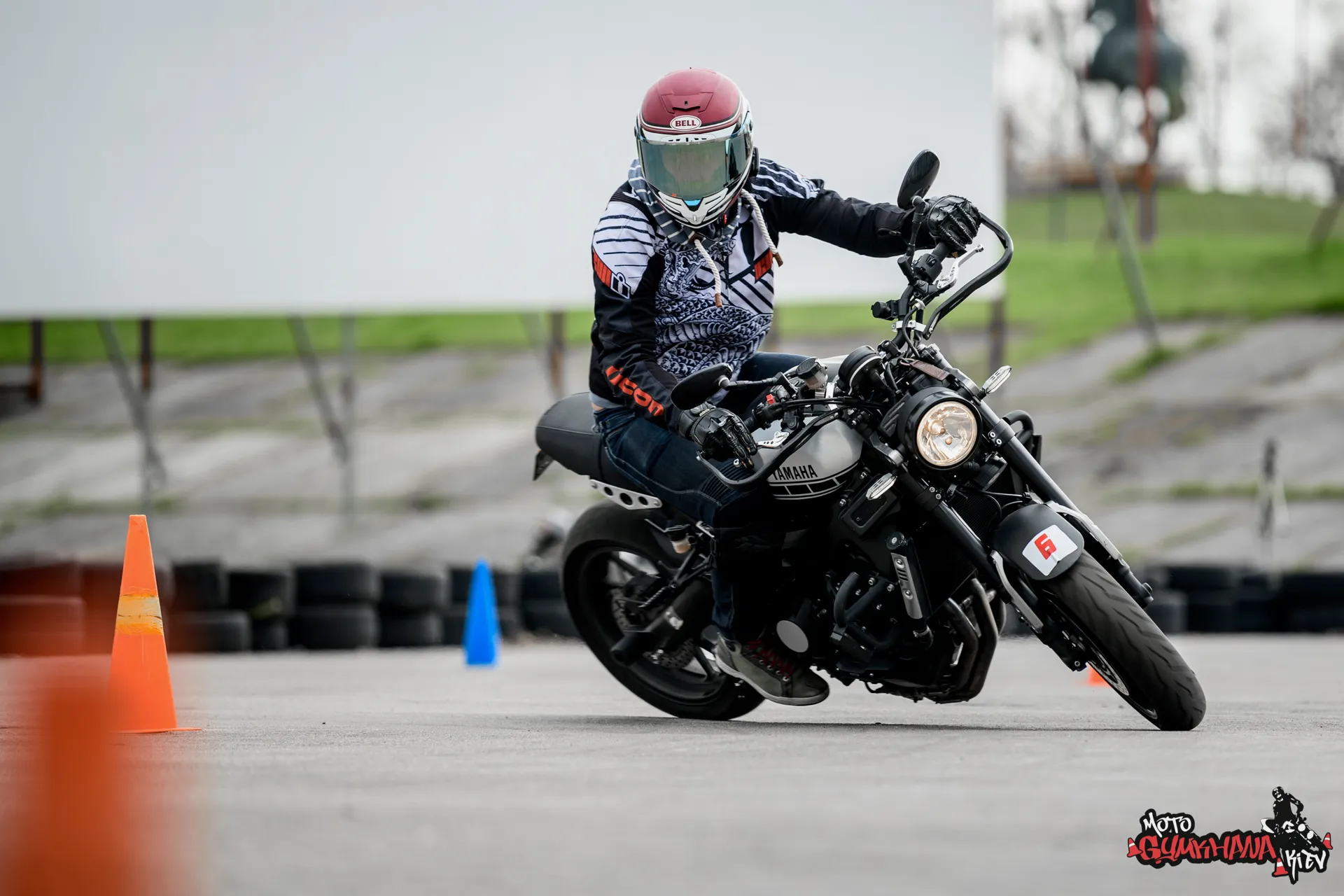
Rear Brake on a Motorcycle: When and How to Use It
For me the rear brake is a tool for the city, low speed and slippery surfaces. In an emergency stop on dry pavement I take my foot off it. Why, and how to set up the pedal.
Motorcycle Without ABS: Do You Need It and How to Brake
I recommend getting a bike with ABS: it forgives mistakes, but it doesn't replace skill. Why the wheel locks and how I brake so I don't lock it.
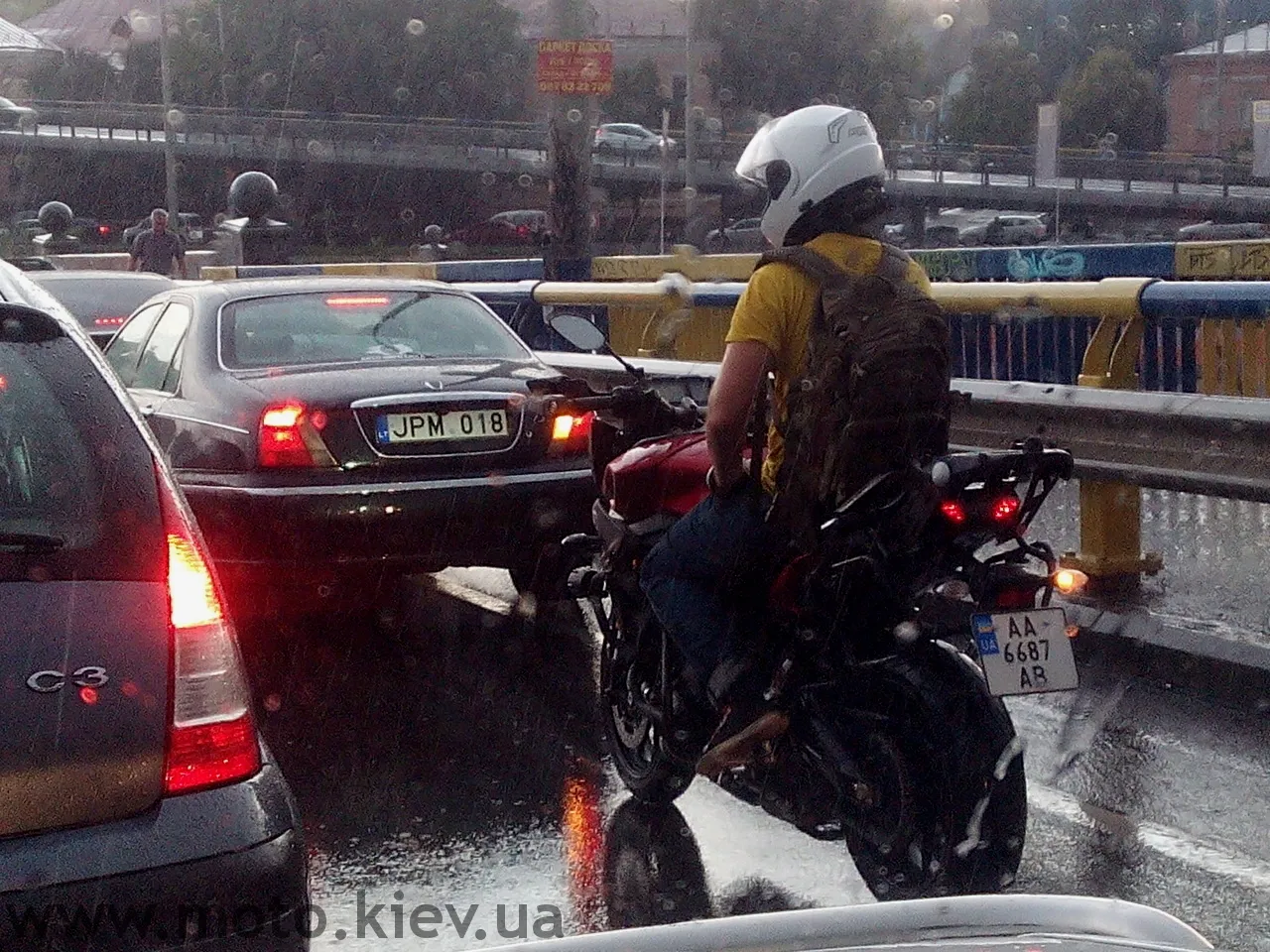
Riding a Motorcycle in the Rain: Braking on Wet Roads
It's slipperiest in the first minutes of rain and when the road is drying. How I brake and open the throttle on wet roads, what I do about markings, manhole covers and rails, and how I practice.
Why Beginner Motorcycle Riders Crash in Their First Season
How beginner motorcycle riders fall in their first season: lost balance at a standstill, a panic grab of the brake on sand, locked wheels. My own falls.
Why Motorcycles Get Rear-Ended at Traffic Lights and in Slowing Traffic
A motorcycle gets rear-ended when the driver behind misses that it's slowing: engine braking shows no brake light. What I do at lights and in traffic.
Is Speed Really the Main Cause of Motorcycle Crashes?
Is speed the main cause of motorcycle crashes? See what MAIDS and NHTSA data show, why speed multiplies rider mistakes, and how to pick your speed in town.