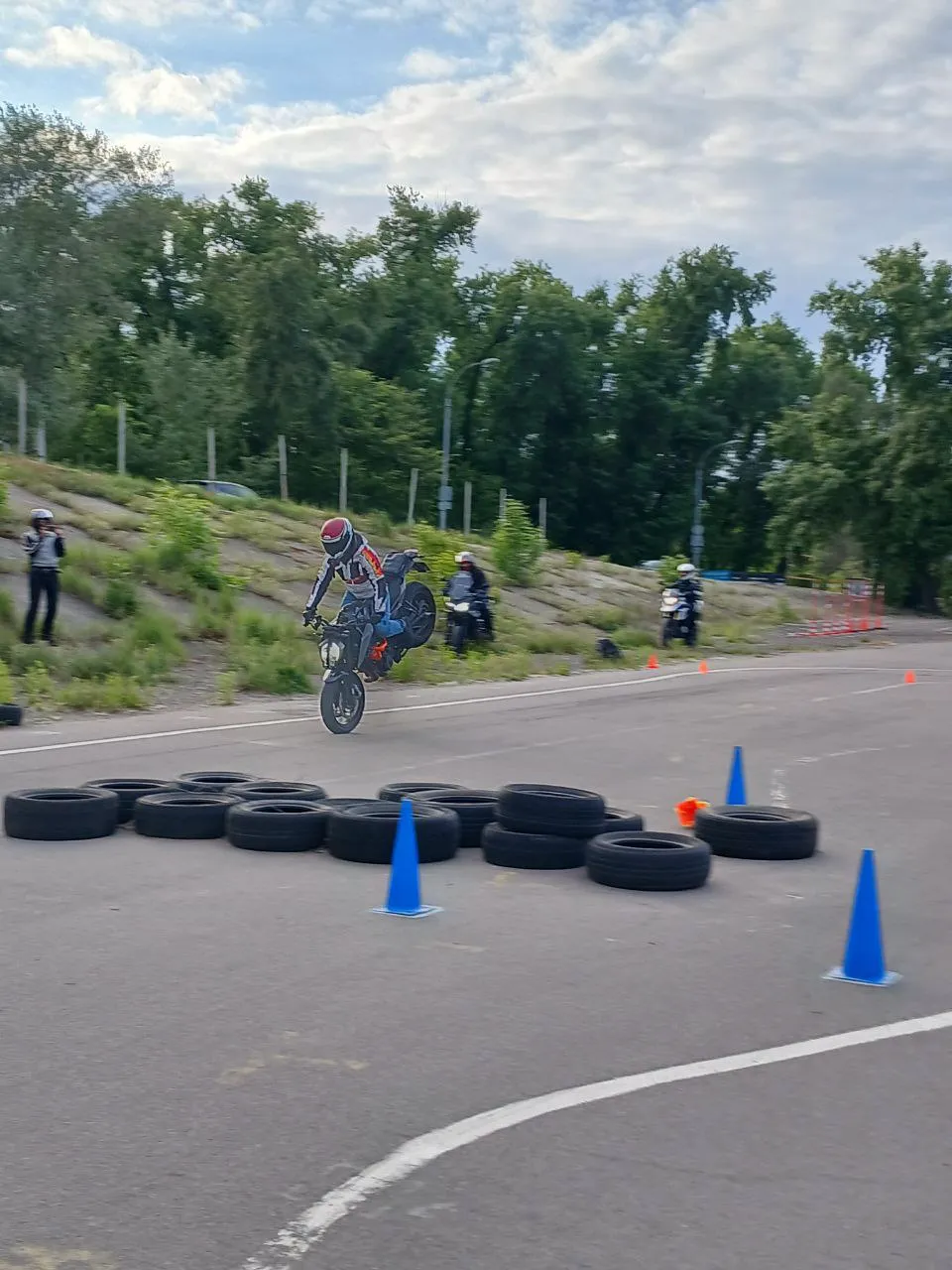
Motorcycle Without ABS: Do You Need It and How to Brake
Yes. For a city bike, I think ABS is a must-have, meaning it absolutely has to be there. If you're choosing a motorcycle now, I recommend getting one with ABS. ABS lets you make a certain number of mistakes without serious consequences, and in the first season there are usually a lot of mistakes. But ABS doesn't replace braking skill, it only helps at the critical moment. If your bike has no ABS, below is why the wheel locks and how I brake so I don't lock it.
Do you need ABS on a motorcycle?
My advice to beginners is one thing: buy a motorcycle with ABS. In my list of motorcycles for a beginner, every model has ABS.
The reason is how people usually make mistakes. In the city, very sudden dangerous situations come up. Especially on a bike without ABS: out of fright the rider usually grabs the brake very hard, front or rear, locks the wheel, and goes down. The price of a mistake is very high.
Almost all beginners have trouble braking, and situations in the city happen suddenly, especially when you're not looking ahead. So I would absolutely recommend getting a bike with ABS: it greatly improves your chances of getting out of the situation. If it so happens that you already have a bike without ABS, definitely get familiar with locking both the front and the rear wheel: how it feels and how to regain control. That's a must-have.
And nobody brakes for me, neither ABS nor experience. Only trained skill.
How does ABS work on a motorcycle?
Sensors on the wheels monitor rotation speed. When a wheel starts to lock, the ABS module reduces and restores brake pressure dozens of times a second. Put simply, the bike detects that the wheel is locked, releases the brakes, and grabs again. At the lever it feels like a vibration, and you can hear the ABS clicking. The bike stays steerable the whole time.
The result of ABS kicking in: a shorter stopping distance and retained steering control.
For me, an emergency stop means the most effective braking right at the edge of wheel lockup. I went through the technique in detail in the article on emergency braking.
Why does the wheel lock when braking on a motorcycle?
Strong, very sharp pressure on the front brake locks the wheel, because the suspension hasn't compressed yet and the contact patch is minimal. A microscopic contact patch of rubber can't take it and breaks loose. The easiest way to lock the wheel is to grab the front brake hard and fast, in one motion. That's how people usually brake in a panic.
After that it depends on the bike. With ABS, the system kicks in and starts clicking. Without ABS, the wheel locks and slides, and there's very little time left to ease off the brake and catch the tire's grip on the road again.
Even the “good” scenario, where the wheel breaks loose and the ABS steps in instead of you crashing, is braking that's worse than optimal.
Another way to lock the wheel: the clutch pulled in together with a sharp press on the brake. That's a separate topic, and I covered it in the article on the clutch when braking.
Is rear wheel lockup dangerous?
Riders who lock the rear wheel are usually the ones who brake with only the rear brake. Most often these are cruiser owners: a cruiser has a long wheelbase, and people get used to the rear brake. It's made worse by the fact that these are often old cruisers without ABS. Although I've seen crashes where people braked with only the rear on street bikes and sport bikes too.
It looks like this. The rider locks the wheel and rides in a slide for a while. The bike starts to turn sideways. The rider gets scared and releases the brake. The wheel suddenly finds grip, the suspension springs back, and it throws the rider off: that's a highside.
What to do with a locked rear depends on the stage you're at. While the bike is still going straight: if you're going to stop anyway, hold it to the end and keep the bike upright; if your speed is high and you need to maneuver, release and brake again. If the bike has already stepped out a lot, roughly 30° or more, don't release, hold it to the end. Release at that angle and you'll be thrown into a highside; hold it and you'll go down in a lowside. But a person, especially an inexperienced one, almost never does that: they always release the brake and get thrown into a highside. It's instinctive: first you get scared and lock the brake, then the bike steps out, you get scared again and release the brake. It's easy to understand but very hard to do.
If the braking isn't an emergency, the rear brake on a long-wheelbase cruiser is enough. In an emergency I'd strongly advise using the front.
How to brake on a motorcycle without ABS
Progressively. You have to press smoothly but quickly, not abruptly.
My timing is “one-two”. First I apply light pressure so the front suspension compresses. Then the front tire's contact patch grows. Once the suspension has compressed, I press harder. As a guide to the pressure: light at the start, much harder on the count of “two”, and the whole thing takes very little time.
A habit: in the city I keep my fingers on the brake lever.
For me the rear brake is a great tool when lane splitting, in low-speed maneuvers, in the city, and in calm braking. In an emergency stop, in my view, the rear plays no role and only takes up attention. That's my personal opinion.
What to do when you hear the ABS while braking or feel the wheel at its limit: listen to the bike, avoid triggering the ABS, and control the brake pressure.
Motorcycle without ABS on a wet and slippery road
The fear of locking the wheel is real, especially without ABS and especially when it's wet, dirty, or there's something like tile under the wheels.
In the calculations on the site, a trained rider on dry pavement decelerates at 8.0 m/s², and on wet at 5.5 m/s². For the pro level it's 11.6 and 7.0 m/s². I keep it simpler myself: I take dry, good pavement as the maximum grip, and a wet surface cuts it substantially.
Road markings, crosswalks, tar patches, and metal manhole covers are slippery.
If the surface is completely slippery, I don't brake on it at all. Or I brake very lightly with the rear. In general it's better to look for another surface with grip and brake on that: gently with the front and gently with the rear too.
On uneven or wavy pavement, grip under braking is very low, and the front wheel breaks loose easily there. You have to brake with the front quite gently, better with the rear. About ABS in these conditions: on dirt and sand it can lengthen the stopping distance.
In a problem corner it's best to straighten the bike up first: it's hard to avoid a fall when you're leaned over. If there's no room to straighten up, a beginner in that situation simply won't cope. Here you have to correct the line without straightening the bike, and that's done with the front brake. That's trail braking, you have to practice it separately, and the skill has to be drilled in. By my estimate, zero beginners will manage it. Without that knowledge and a drilled-in skill, a person won't cope. I'd bet money on it.
How to practice braking without ABS
To understand where the point of lockup is, you have to feel it, and more than once.
- Location. A big parking lot at seven in the morning on a Saturday or Sunday, an hour of calm practice. Or a road outside the city with no intersections.
- Margin. Leave a generous distance so you don't hit the curb. Do the first attempts calmly, not hard, and add gradually.
- Speed. You can practice from a low speed, around 12 mph (20 km/h). That's enough to experiment with locking both the front and the rear wheel. If the front breaks loose, I just release the front brake and regain control. You can fall from a locked front wheel: it starts to slide out sideways, and that happens fast, in about half a second. If you don't regain control, or if you weren't riding quite straight but at a slight angle, you go down almost instantly. If you're riding straight and lock the front, you have a fraction of a second to release the brake and regain control.
- Repeats. You can usually see improvement by the 3rd or 4th try compared with the first.
- Rain. I recommend trying the same in the rain: it improves your understanding of grip a lot. Do it carefully: the front wheel will most likely break loose.
If you can, practice emergency braking both on a bike with ABS and on one without, so you know the difference. I put together the typical mistakes in the article on 8 common braking mistakes.
FAQ
Is it safe to ride a motorcycle without ABS?
ABS lets you make some mistakes without serious consequences. The problem is usually a sharp press on the brake out of fright: the wheel locks. That's why I recommend buying a bike with ABS, and practicing emergency braking both with and without it.
Why can the wheel lock?
From strong, sharp pressure on the brake when the suspension hasn't compressed yet and the contact patch is minimal. On a wet road, road markings, manhole covers, and uneven pavement there's less grip, so the wheel breaks loose more easily.
Is wheel lockup when braking dangerous?
A locked front wheel slides, and there's very little time to ease off the brake. A locked rear turns the bike sideways, and if you release the brake at that moment, the wheel finds grip and a highside can happen.
Liked it? Share with fellow riders
Nebachiv Book and App — in progress
Get early accessRead more

Rear Brake on a Motorcycle: When and How to Use It
For me the rear brake is a tool for the city, low speed and slippery surfaces. In an emergency stop on dry pavement I take my foot off it. Why, and how to set up the pedal.

Riding a Motorcycle in the Rain: Braking on Wet Roads
It's slipperiest in the first minutes of rain and when the road is drying. How I brake and open the throttle on wet roads, what I do about markings, manhole covers and rails, and how I practice.

“8 Common Braking Mistakes That Most Motorcyclists Make—And How to Avoid Them”
Discover the top 8 braking mistakes motorcyclists make and how to fix them. Learn techniques to master emergency braking and reduce your risk of accidents.
“How to Brake a Motorcycle from 60 mph: Master Emergency Braking Techniques”
Master emergency braking on your motorcycle. Learn techniques, avoid common mistakes, and discover how to practice braking for maximum safety
Should You Pull the Clutch When Braking on a Motorcycle
I don't pull the clutch in at the start of braking: I pull it in at the end, just before a stop. Why, plus downshifting and engine braking.