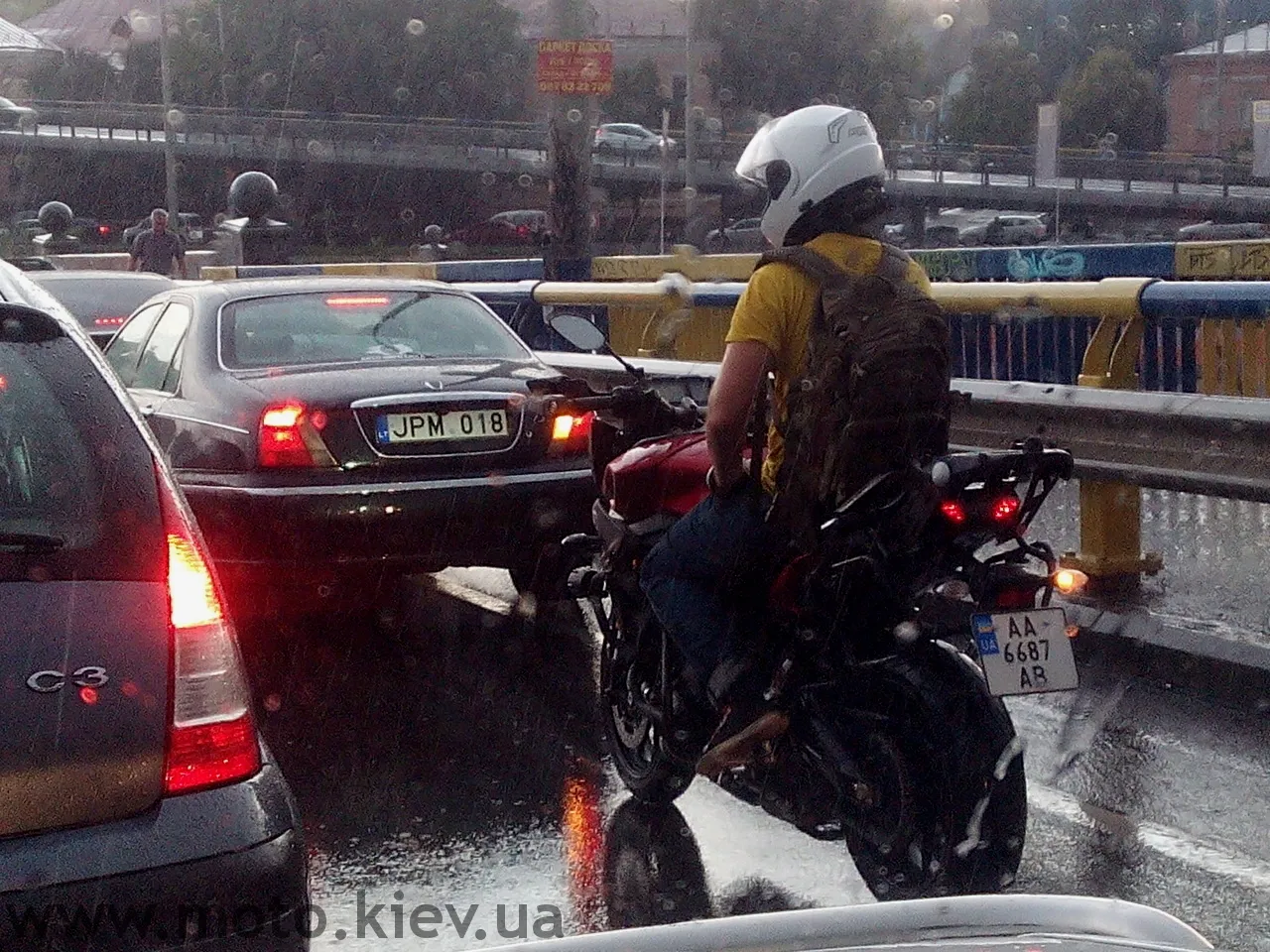
Riding a Motorcycle in the Rain: Braking on Wet Roads
When riding a motorcycle in the rain, it's slipperiest not in the middle of a downpour, but in the first minutes of rain and when the road is drying out. Once the rain is steady, the surface is more predictable and grips better. My main principle on wet roads: the slipperier it is, the smoother I am with the throttle and the brakes.
Rain, like speed, multiplies technique mistakes. Below: where exactly it's slippery in the rain and what I do about it.
When is wet pavement the slipperiest?
A motorcycle holds the road through friction. When grip drops, I can't brake, turn, or open the throttle normally.
At the start of rain a slick film forms on the pavement: raindrops and dust make a film of dirt. When the rain goes on longer, grip gets better than it was at the start.
The second slippery moment comes when the road is drying. If the pavement has alternating dry and wet patches, for me that's always slippery. Damp patches after rain are even slipperier than an evenly wet road.
Water isn't the only thing that takes away grip in the rain. On my list of slippery things, next to wet pavement, are leaves, sand, dirt, oil patches, gravel, and metal: manhole covers and tram tracks.
Cold adds to it. Cold wet pavement grips worse than warm wet pavement. I wrote about the cold season in my article on early-season rides.
Aquaplaning is a real thing, and a motorcycle loses it fairly easily. I haven't gone down that way myself, but I've seen a great many aquaplaning videos. So I'd advise avoiding puddles and not entering them at speeds above 90 km/h (about 56 mph). If there are really a lot of puddles and they're hard to go around, I'd advise slowing down.
How to brake on wet pavement on a motorcycle
The stopping distance on wet pavement is longer than on dry. According to the calculations I use on the site, from 62 mph on dry pavement a rider with the best braking technique stops in about 108 ft (33 m). On wet, the same speed gives about 180 ft (55 m) for that rider and about 230 ft (70 m) for a trained one.
In the rain I change my speed, of course: I need roughly one and a half times more distance to stop. I cut my speed by at least 20 to 25% and keep one and a half times more following distance than on dry.
The slipperier it is, the more smoothly you need to brake with the front and the more you should use the rear. I load the brakes progressively, without a jerk.
On plain wet pavement you can brake fairly hard, but very smoothly: I load the brakes progressively.
The fear of the front brake is real, especially if there's no ABS and the road is wet or dirty. Why not abruptly: the easiest way to lock the wheel is to grab the front lever hard and in one motion. On slippery ground beginners usually panic and lock the wheels. Beginners can lock the rear wheel too, especially without ABS. For cruisers that's a standard problem.
If the rear locks and you go into a slide: while the bike is still going straight: if you're going to stop anyway, hold it to the end and keep the bike upright; if your speed is high and you need to maneuver, release and brake again. If the bike has already stepped out a lot, roughly 30° or more, don't release, hold it to the end. If you're already at an angle, you most likely haven't done anything by then, so you shouldn't let it get that far.
I advise my friends to buy a bike with ABS. It lets you make some mistakes without serious consequences. I went through the technique itself in the article on emergency braking.
How to brake on wet dirt, sand, and metal
If I'm braking and run into a small piece of road marking, a strip of dirt, or a bit of sand, I keep braking with the front: I just ride over it while I slow down. If it's a large tar patch or a big manhole cover, I won't brake with the front on it. Plain wet pavement doesn't belong here; I wrote about it above. On wet road markings, if they're clean, I brake with the front.
A patch of wet dirt is as slippery as ice. That's where a common beginner fall comes from: a rider wants to park, rides onto dirt near the curb, squeezes the front brake, and loses the front wheel.
Road markings, manhole covers, and tram tracks in the rain
Road markings, crosswalks, tar patches, and metal manhole covers are slipperier than the pavement next to them. Wet cold tram tracks, wet manhole covers, and wet cold road markings are like ice to me.
I call tram tracks the king of slipperiness. I'm especially careful where they stick up out of the road surface.
On my list of signs that a beginner is becoming experienced, there are the items “rode in the rain”, “fell on tram tracks”, and “fell on road markings”.
What I do:
- I cross tram tracks and manhole covers at a right angle;
- if the surface looks suspicious, I ride straight, without leaning;
- on a big patch of marking and on metal I don't brake with the front and don't add throttle with a jerk.
There's one small thing I've gone down on myself: I stopped, put my foot down on the slippery spot, and fell.
How to ride corners on a wet road
In problem corners it's best not to brake at all. It's hard to avoid a fall when you're leaned over, so I try to straighten the bike up or reduce the lean angle, get through, and brake once I'm out of the corner. If braking is still necessary, in these conditions I'd brake only with the rear.
I open the throttle without jerks. A damp road is one of the typical causes of a lowside.
It's hard to give advice on lean in a vacuum, because there are so many different conditions: what stage the rain is at (been going a long time, just started, or already drying), what tires are on the bike, what the tire pressure is. All of it affects grip. But overall you lean the bike roughly 25 to 30% less than on dry, and you'll most likely be fine. And you have to look carefully and not ride onto slippery surfaces: manhole covers, road markings. In the rain they're 100% slippery, and you can go down on a marking if you ride onto it in the rain in a corner.
Motorcycle tires for riding in the rain
How much grip I have depends on the tire. Soft, warm rubber gives a bigger contact patch and more braking potential. Old, hard, cold rubber or an overinflated tire give a smaller contact patch, and such a wheel is easier to lock.
Manufacturers recommend inflating to 2.6 to 2.8 bar, and that's too much. In my view, I'd run 2.3 to 2.4. In the cold I'd lower it, to 2.0 for example. Lowering it will make the tires wear faster, but there will be more grip. I find it hard to say how much that changes in percent: it's a very subjective feeling.
A bald tire loses water drainage and grip. When the tread grooves start to disappear, it's time to change the tire. Cold rubber also grips worse.
Your visor in the rain
First of all, a Pinlock, because in the rain the visor fogs up, and with a Pinlock it won't. Second, I'd try not to wipe the drops off with your glove, because you'll scratch the visor. If you don't have a Pinlock, you can crack the visor open a little and ride at low speed. At higher speed, from around 30 to 35 mph (50 to 60 km/h), you can already ride with the visor cracked open. But in my view, for city riding and the cold season a Pinlock is simply a must-have.
How to practice riding a motorcycle in the rain
I strongly advise my friends to simply go out into the rain to a parking lot and brake fairly hard to understand the limits. It improves your understanding of tire grip on the road a lot, but you have to do it carefully.
- Location. An empty parking lot. I leave a generous distance so I don't hit the curb.
- Start. The first attempts aren't hard: gradually, calmly. I load the brakes progressively, but not sharply.
- Wheel lockup. You'll most likely lock the front wheel: while practicing, you'll be locking the wheel into a skid or into ABS. That's normal and part of the process. Of course you can fall, but better sooner than later, and once.
- Goal. Get the braking down consistently: know the distance in which I'll stop from a given speed in the rain and how much more that is than on dry.
I practice braking in a parking lot in both dry and wet weather. City riding is mostly straight lines, so hard braking in a straight line, preferably on wet as well, is one of the first skills I'd put on the list.
FAQ
How do you ride on a wet road and slippery sections?
Smoothly with the throttle and brakes. I cross tram tracks and manhole covers at a right angle, and on a suspicious surface I ride straight, without leaning. I'm most alert in the first minutes of rain and when the road is drying out.
How do you brake on different surfaces: sand, wet, gravel?
I won't brake with the front on a large tar patch or a big manhole cover. A small piece of road marking, a strip of dirt, or a bit of sand I ride over while still braking with the front. For plain wet pavement, see the braking section above.
What should you wear in the rain?
It depends on how long I'll be riding in the rain. If I have to ride, say, half a day, then it should of course be rain gear and boot covers. If it's an hour in the city and I get home, I don't bother and just get wet, or I put on some jacket with a membrane.
Liked it? Share with fellow riders
Nebachiv Book and App — in progress
Get early accessRead more
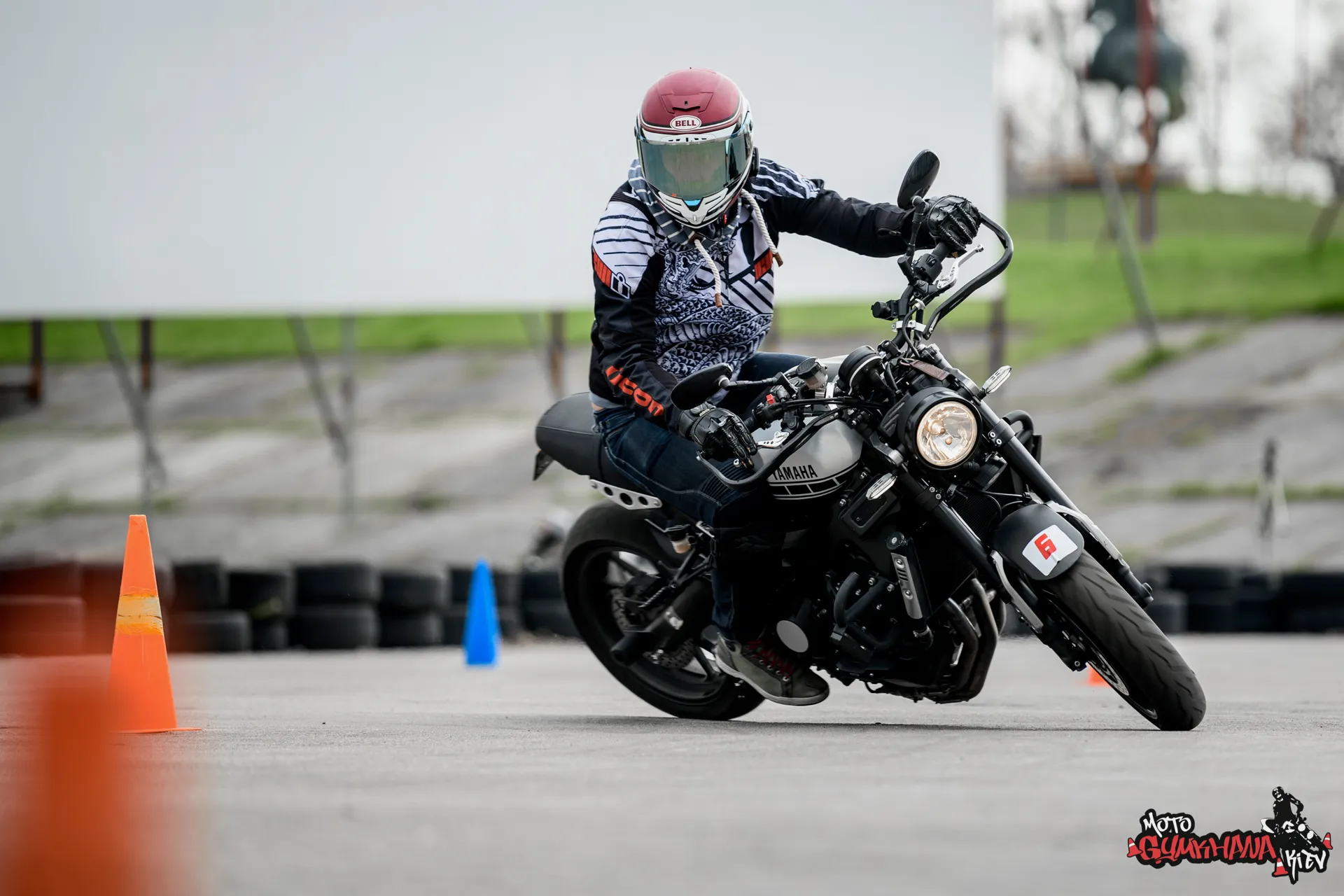
Rear Brake on a Motorcycle: When and How to Use It
For me the rear brake is a tool for the city, low speed and slippery surfaces. In an emergency stop on dry pavement I take my foot off it. Why, and how to set up the pedal.
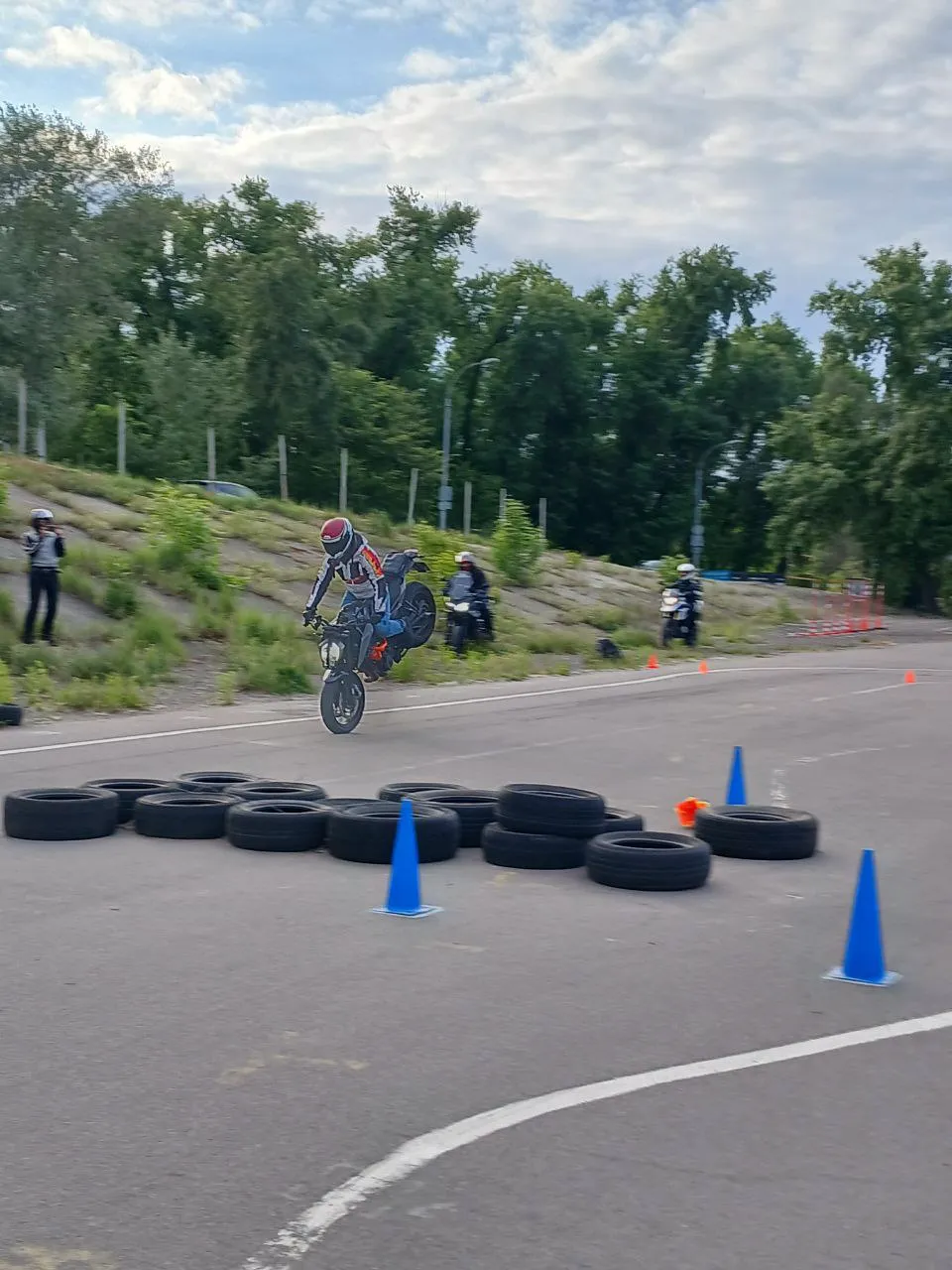
Motorcycle Without ABS: Do You Need It and How to Brake
I recommend getting a bike with ABS: it forgives mistakes, but it doesn't replace skill. Why the wheel locks and how I brake so I don't lock it.
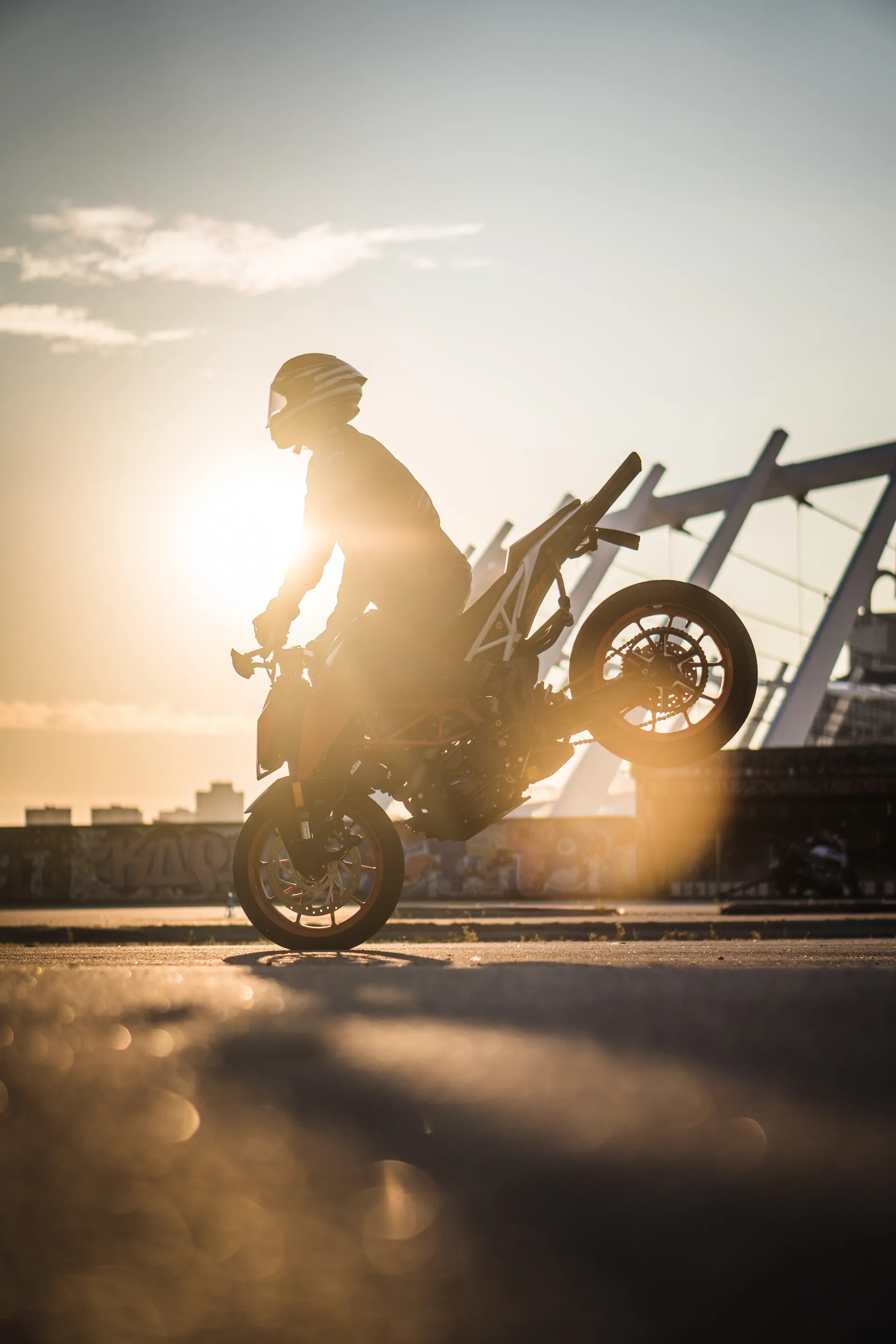
“How to Brake a Motorcycle from 60 mph: Master Emergency Braking Techniques”
Master emergency braking on your motorcycle. Learn techniques, avoid common mistakes, and discover how to practice braking for maximum safety
Why City Riders Crash in Corners—and How to Avoid It
Why do city riders crash on serpentines? Discover how to avoid low-sides and high-sides with proper leaning, trail braking, and safety techniques for cornering.