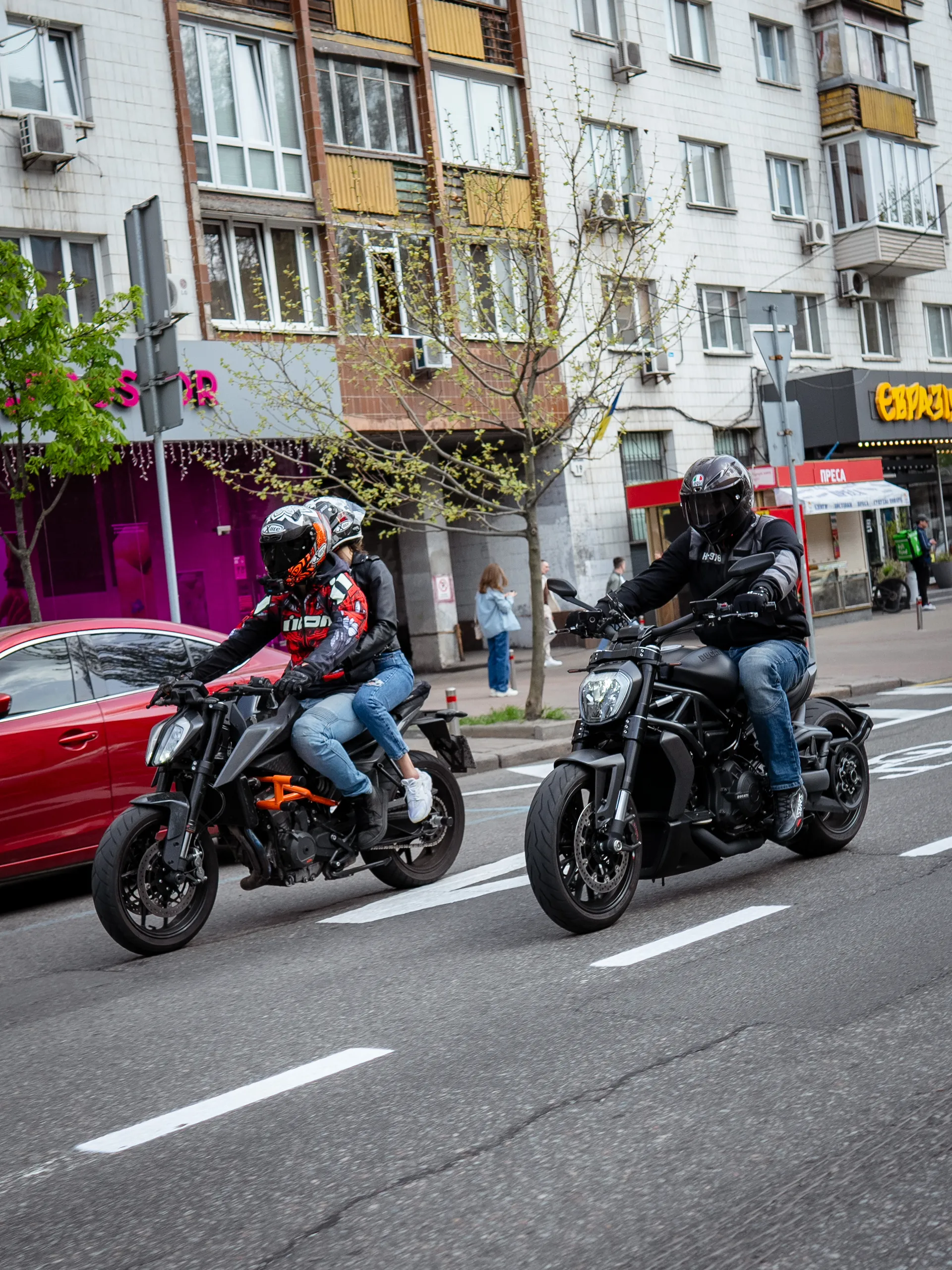
Why Motorcycles Get Rear-Ended at Traffic Lights and in Slowing Traffic
A motorcycle gets rear-ended at a traffic light when the driver behind doesn't register that the bike is slowing down or has already stopped. A motorcycle slows on engine braking with no brake light, and a narrow silhouette with a single headlight makes it harder to tell that you're closing in on it. When you stop for a yellow, add the driver who usually speeds up for a yellow. What I do: I flag every slowdown with a light touch of the brake, and I don't stop in the center of the lane.
What it looks like: you roll off the throttle and the brake light stays dark
This is a common one for new riders: you're riding along, you get lost in thought, and you roll off the throttle. Your speed drops fast, and the driver behind can miss that moment right up until the impact.
The second version of the same thing: the habit of slowing down on the gears. The brake light doesn't come on, so to the car or the rider behind you, your braking isn't obvious.
When I started riding, this was one of my fears too: that someone would hit me from behind. All of these fears can be overcome.
Why the driver behind doesn't read a motorcycle in time
A rider is “narrow”: he doesn't grow in size, and that's exactly how our eyes judge that an object is getting closer. Because of this, a motorcyclist's speed is often hidden, and riders often rear-end each other. Car drivers, in my opinion, do it even more often, because they're on their phones. I wrote about how the eye misses a motorcycle in my article on perception error.
Between riders there's also the accordion effect: a group stretches out and bunches up as it rides. The first rider brakes, the second a bit later, the third later still. Sometimes the first is already braking while the third is only just opening the throttle, and the third misses that moment.
How a semi truck almost hit me
In my first season a semi almost hit me from behind. I got lost in thought about where to go next and rolled off the throttle. The truck driver wasn't expecting it and read it late.
I took two things from that. First: drill your technique in as fast as you can, so you're not “thinking” about operating the bike while you ride. I explained why a new rider drifts off in the middle of the road in my article on concentration. Second: with no brake light, nobody will read your engine braking, so you have to back it up with a light touch of the brake.
A separate word on semis: in the city, stay as far away from them as you can. If a semi is behind you, the driver may not see you because of its many blind spots. And its brakes can fail, and then it either runs into you from behind or rolls back.
Traffic lights and the yellow: where to stop
If you stop for a yellow, there's always the risk that the person behind you is someone who usually speeds up for a yellow. It makes sense not to stop in the center of the lane, so he has a way to get around you.
The same goes when you're the first one to stop at a light and traffic is still coming up behind you: better not to sit in the middle, and to pulse the rear brake so your brake light flashes.
If you suspect the car behind isn't going to stop, move right away into the gap between lanes or into another lane.
For me this is always a dilemma. I'm riding fairly fast and I spot a person in a crosswalk. I can stop easily myself. But I have serious doubts about the cars behind me: they have to see the person, see that I've stopped, and still brake in time. I try to stop anyway, and I turn on my hazards or raise my hand.
Slowing traffic: where to ride
New riders often ride in the middle of the lane and very close to the car in front. From there you can't see much of the road ahead, and when traffic suddenly stops, the decision about which way to swerve comes late.
I almost always ride behind a wheel of the car in front. That way I can see far ahead through the line of cars and notice early that traffic is starting to slow. Then I get on the brakes a little right away, which shows the drivers behind me that there's a stop ahead. That lowers the risk of someone running into me. There's more on this in my article on lane position. There's one more upside: if the driver behind can't stop in time, he has a chance to get around you.
How to learn this
The moment when someone ahead “starts thinking” and rolls off the throttle is visible on video. In the Nebachiv app I break down real crash videos: what happened, why, and how it could have been avoided. There's also a crash-prediction game: you watch a video and learn to spot the danger before it turns into a crash.
FAQ
Why do motorcycles get rear-ended at traffic lights?
The driver behind doesn't read the slowdown: engine braking doesn't trigger the brake light, and a narrow silhouette with a single headlight makes it harder to judge closing speed. So I signal my braking and don't stop in the center of the lane.
Can the driver behind see that I'm engine braking?
No, the brake light stays off. Back up your engine braking with a light touch of the rear brake.
Where should you stop at a traffic light on a motorcycle?
Not in the middle of the lane, so drivers can get around you. If you're first and traffic is still coming up behind you, pulse the rear brake. If you suspect the car behind won't stop, move into the gap between lanes or into another lane.
App access opens in waves, in the order requests come in
Get early accessLiked it? Share with fellow riders
Read more

Rear Brake on a Motorcycle: When and How to Use It
For me the rear brake is a tool for the city, low speed and slippery surfaces. In an emergency stop on dry pavement I take my foot off it. Why, and how to set up the pedal.
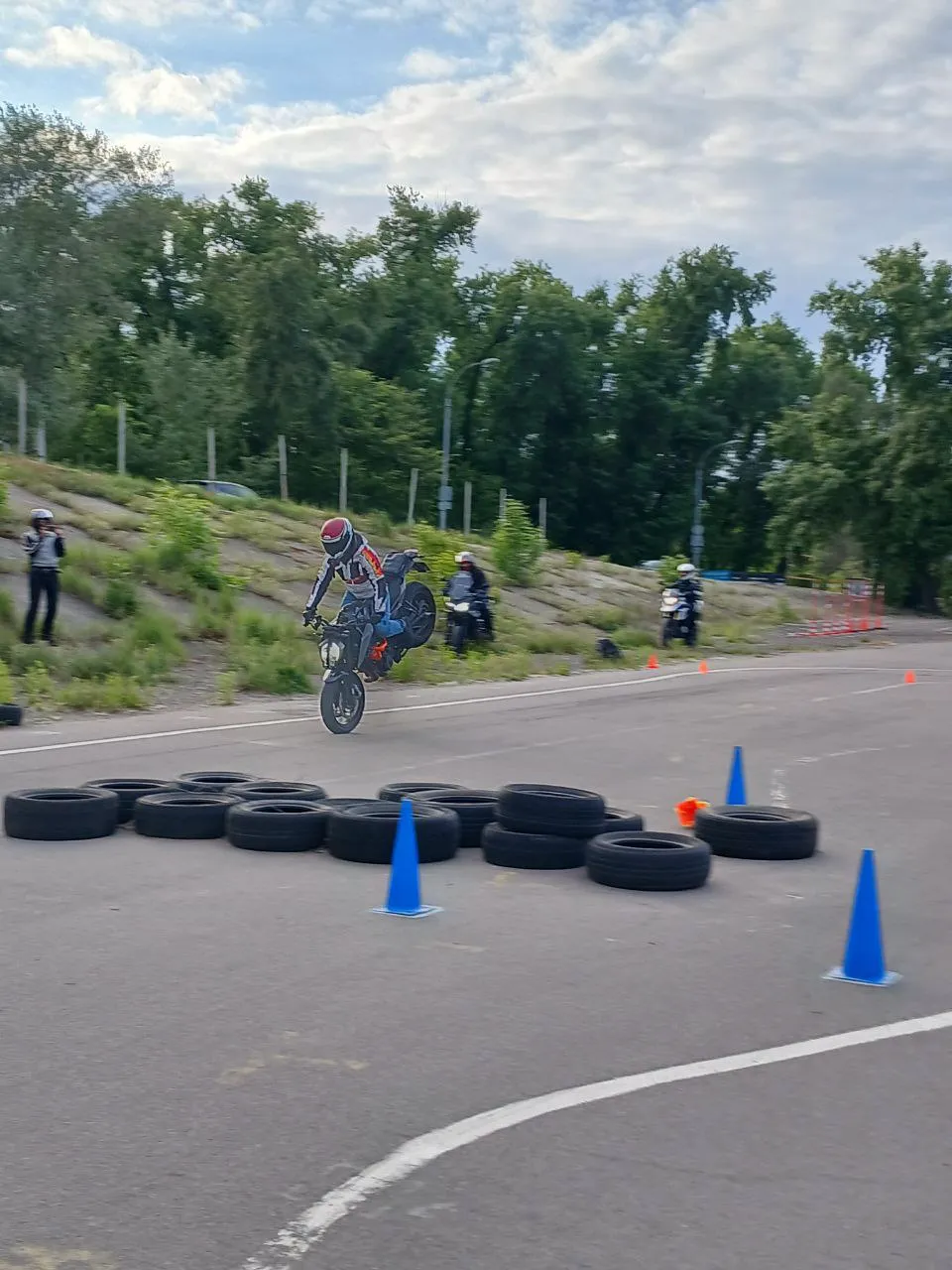
Motorcycle Without ABS: Do You Need It and How to Brake
I recommend getting a bike with ABS: it forgives mistakes, but it doesn't replace skill. Why the wheel locks and how I brake so I don't lock it.

Riding a Motorcycle in the Rain: Braking on Wet Roads
It's slipperiest in the first minutes of rain and when the road is drying. How I brake and open the throttle on wet roads, what I do about markings, manhole covers and rails, and how I practice.
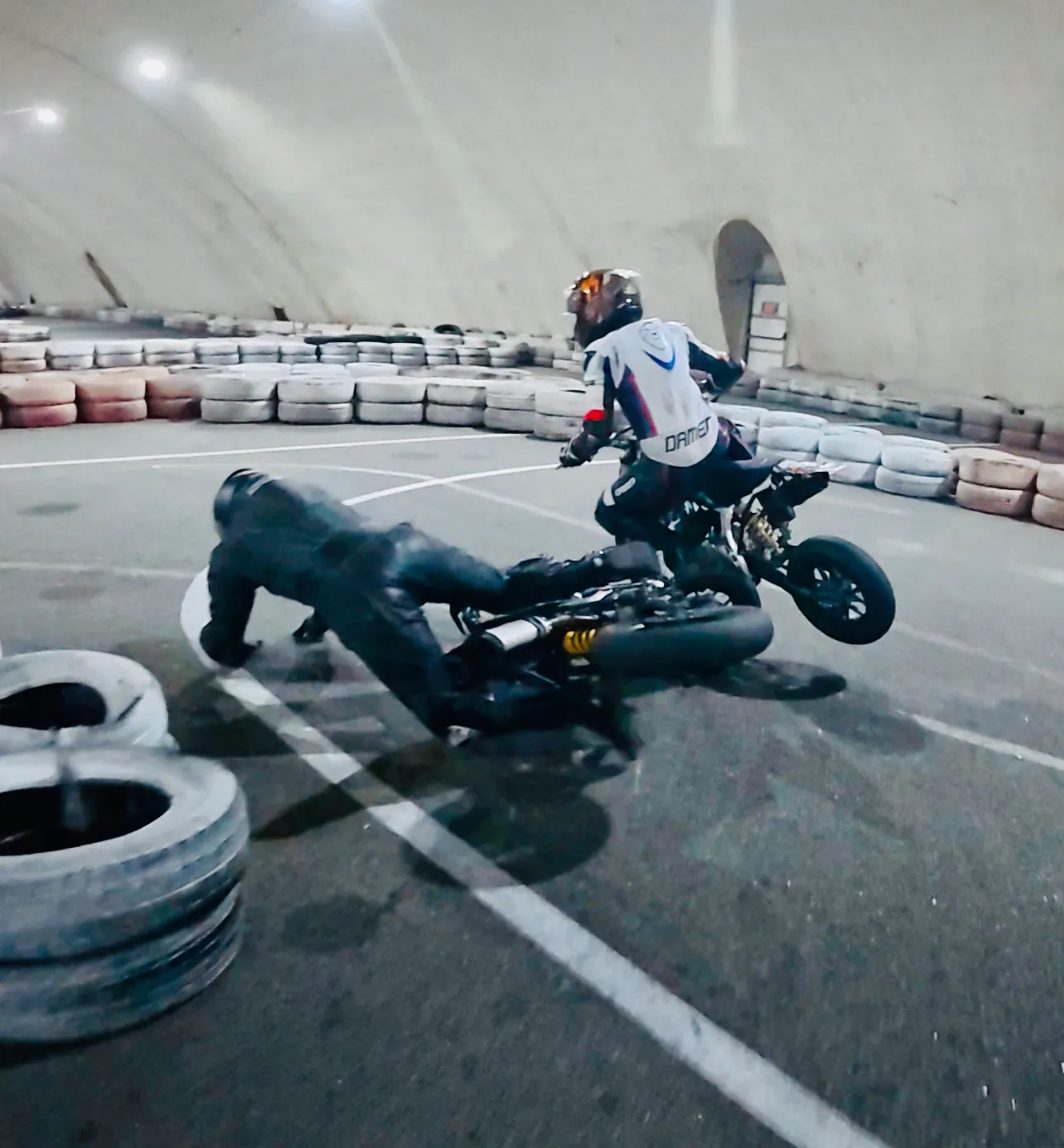
Why Beginner Motorcycle Riders Crash in Their First Season
How beginner motorcycle riders fall in their first season: lost balance at a standstill, a panic grab of the brake on sand, locked wheels. My own falls.
Common Lane-Splitting Mistakes New Riders Make (And How to Fix Them)
Where new riders go wrong between the lanes: balance at walking speed, blockers, blind spots, impatience. And the drills that fix it.
Lane Position: Why Riding in the Middle Is Dangerous
Why do novice motorcyclists stay in the middle of the lane, and why is it dangerous? Discover how proper lane positioning improves visibility, creates escape routes, and defends your safety on the road.