How to Choose a Motorcycle Helmet: Type, Size, Visor and Certification
I recommend a full face or modular helmet: a simple “street” model with a wide field of view and a clear visor. Choose it to fit the shape of your head: the helmet should sit snug but not pinch anywhere. Before buying, check the certification: ECE, DOT, or SNELL.
The priority when buying gear: first the helmet, then gloves.
What type of motorcycle helmet should you get: full face, modular, or open face?
There are four types: full face, modular (flip-up), open face, and half helmet.
I don't recommend an open face helmet. When you fall face down, your jaw won't thank you for an open helmet. I know this from my own experience: when I was doing gymkhana, I fairly often lost the front end and fell face down. That was enough for me never to buy an open face helmet.
In a fall or a crash, it's usually the head and legs that get hurt first, and a noticeable share of impacts land on the face and jaw.
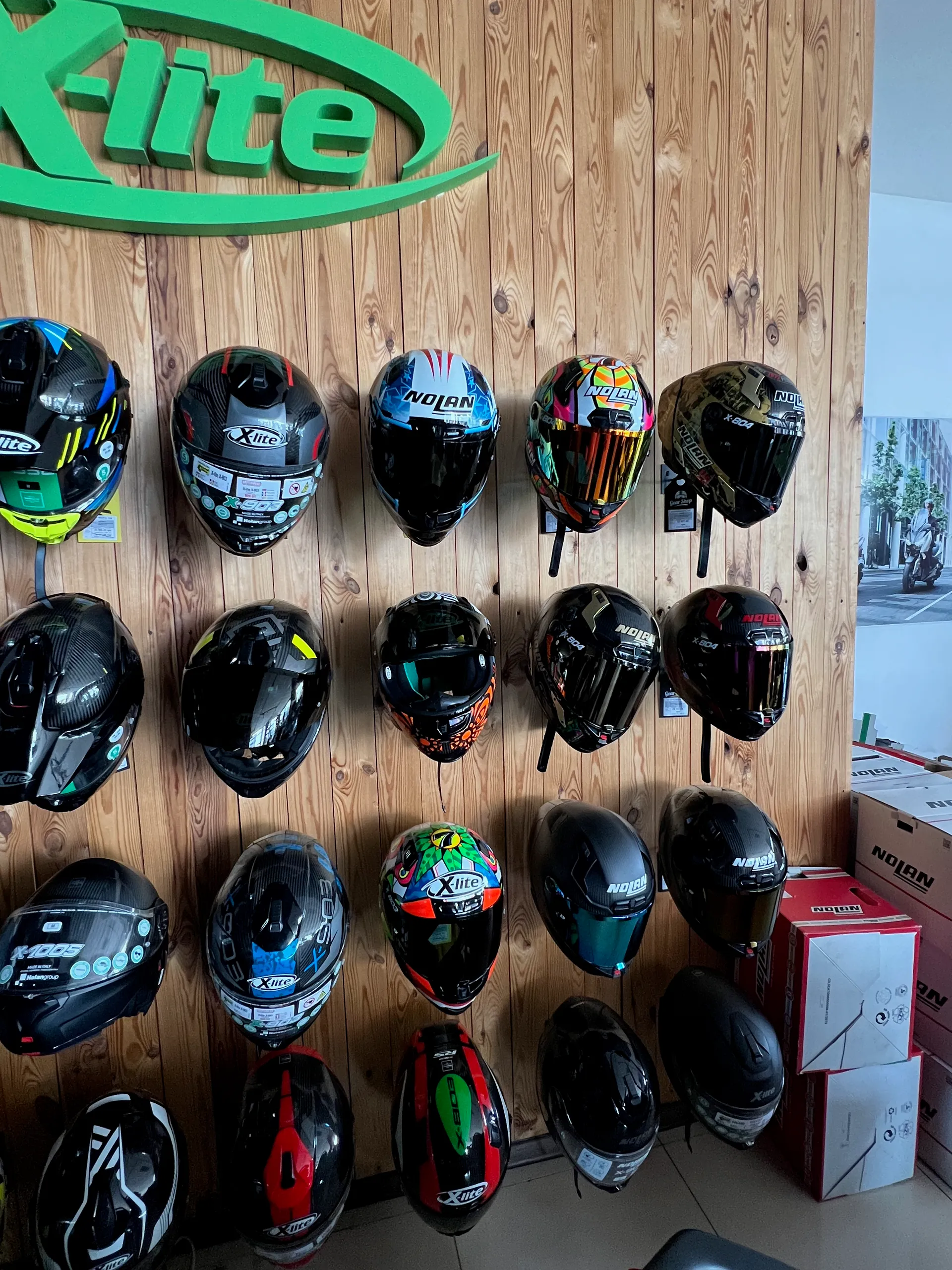
For the city I recommend a full face or a modular. I've had a modular too, a Nolan N-103, and it was fine. I wrote briefly about how each type is built in the glossary: helmet types.
Which helmet to get for the city: street or sport?
To start, get a simple “street” model, not a carbon “sport” one.
- Sport: ventilation is usually the best, but in spring or autumn that cold wind goes straight onto your head. It's very loud, and the side view is small: you look at one point like a predator and just charge forward.
- Street: ventilation is worse, but the helmet usually closes up well, and it's much quieter than a sport one. The side view is much wider.
- Touring: usually the most comfortable, the quietest, and the warmest in spring and autumn, but it weighs more. The side view is also much wider than in a sport helmet. A sport-touring helmet is also much quieter than a sport one.
Side view matters a lot in the city, so get either a street or a touring helmet, with a wide eye port.
Examples from my own helmets. In the Nolan N70 it feels like you're riding with no helmet at all, the view is that wide. The sport X-lite 803 breathes and its lining is comfortable, but it's loud and the view in it is very tunnel-like. I think the sport-touring X-lite 903 is a great helmet: comfortable, quiet, light.
How to choose a motorcycle helmet size
The helmet should sit snug but not pinch anywhere. On the cheeks it should fit tightly, that's normal: later it will settle a little.
For a long time I didn't understand why a helmet has to fit very snugly, or how much that matters. A loose helmet is very likely to fly off. This also applies to the “universal” size L helmet that people put on a passenger.
Everyone's head shape is different, and helmet shells are different too. So you need to find your shape and the brand that will fit you. Put the helmet on and walk around the store in it for 10 minutes. If something hurts or pinches, don't take that helmet.
Helmets are like ski boots: at first you don't understand how one is supposed to fit. When I bought my first one, the salesman explained that a helmet shouldn't wobble on your head and shouldn't pinch. Mine was a bit tight, and I didn't understand whether that was normal or not.
The main thing is that you feel no discomfort anywhere on your head itself. My helmet was a bit tight, but it settled later. To check the fit, shake your head: the helmet shouldn't wobble. Measuring your head circumference with a tape isn't necessary.
Put the helmet on the right way: take it by the straps and pull them apart to the sides. I didn't understand this, and probably put it on very painfully, over my ears, for the whole first season. Then I realized it stretches very easily and goes on easily.
What makes a motorcycle helmet good: what to look at besides size
I want a helmet to be good-looking and quiet, with a good lining and good ventilation. Build quality, the inner liner, and weight matter too. Premium models usually have room for a headset and an internal sun visor.
I put a headset in all my helmets: not for calls, but to listen to music. But at the beginning I wouldn't recommend it. First, music changes your inner state: you may ride much more aggressively. Second, at first it's very important to hear everything going on around you: you may not see a car, but you can hear it.
Which motorcycle helmet to buy: brands and price
The person who first took me for a ride on a motorcycle said: arms and legs, whatever, but buy a decent helmet. His own helmet was more expensive than the one he was recommending to me. That's when I understood: your head matters.
Good-enough mid-range brands: Nolan, Shark, Scorpion, LS2, MT, HJC. Premium segment: X-lite, Shoei, AGV, Bell, Arai. On prices: by my estimates, a mid-range helmet costs $200–400.
The minimum option, by my estimates: a helmet for $200–300, Nolan, Shark, Scorpion or LS2. My first helmet was a Nolan, and overall it was a very decent purchase: for the money, Nolan makes very good helmets. There are also very cheap helmets, at $50–100, and helmets at $700–1000. I definitely wouldn't buy a used helmet.
At first I picked helmets by looks myself and fell for Icon, and that was a mistake: I liked the design, but the lining fell apart very quickly. I rate the quality a 3. Icon's comfort, noise level and build quality are a C-minus. When you have nothing to compare with, that's hard to tell, and these flaws also show up over time.
I can't name a helmet that's stronger than the others: I don't have data on that.
You should try on all your gear in a store. What fits, you can buy there or order from Europe or the States. It will be cheaper, but you'll have to wait. What you tried on, check against reviews. Revzilla.com is the big US store for riding gear: it's handy for checking reviews; for helmets there's also championhelmets, and deals from Europe are on fc-moto.de. Don't skimp on a helmet; the rest of my advice on first gear is on the page for a new rider.
Which motorcycle helmet certification matters: ECE, DOT, or SNELL?
A helmet must have a certification: ECE, DOT, or SNELL. Here is how they differ and where to find the mark:
- ECE 22: the European standard, valid in Europe and Ukraine. Helmets are tested by independent laboratories. The mark: a tag sewn onto the strap with the letter E and a number.
- DOT (FMVSS 218): the US standard. The manufacturer certifies the helmet itself, and the government checks selectively. The mark: a DOT sticker on the back of the shell.
- SNELL: a voluntary standard from an independent foundation, with the toughest impact tests. The sticker is usually inside, under the lining.
A decent minimum for us: ECE. The strictest standard: SNELL.
Which visor to choose: clear, dark, or photochromic?
I recommend a helmet with a clear visor. Dark and mirrored visors look cool, but in the evening you see worse through them, and at night you can miss a pedestrian or a dog. Buying only a dark or mirrored visor is a big mistake. A dark visor at night counts as a visibility blocker, and there's a separate piece on it: visibility blocker.
There are two ways out: carry a clear visor with you and swap, or buy a photochromic one. A photochromic visor changes its tint depending on the sun. It's expensive, but very convenient.
Photochromic visors are made by Shoei and Bell, that's what I know. I have a Bell Race Star with a photochromic visor, and for the city it's super convenient.
Another option for the sun: an internal sun visor built into the helmet, usually in street or touring helmets. It's a cheaper alternative to a photochromic or dark visor. It has downsides: over time dust gets onto the lenses, and they're not very convenient to clean. In the rain they can fog up, so it's very important not to suddenly drop the internal sun visor in the rain: you lower it and it's completely fogged. That happened to me on mountain serpentines, and it was very dangerous.
A visor also protects your face from a stone thrown up from under a truck's wheel. Without a visor or with it open, a wasp can get in your eye, and the car ahead can turn on its washer, and the fluid can fly into your eyes.
What to do when the visor fogs up
Fit a Pinlock. It's a film on the inside of the visor: there's air between it and the visor, so the visor usually doesn't fog up. A Pinlock creates a double-glazing effect. It's best to have a helmet with adjustable ventilation and a Pinlock on the visor. Depending on the helmet, a Pinlock may come in the box or be bought separately. You need a Pinlock in cold weather. Wearing it in summer is a mistake: micro-dust collects between the Pinlock and the visor and scratches both the visor and the Pinlock itself. So for summer you should take it off. I also wrote about a fogged visor and a dark visor at night in the piece “Abruptly”.
How to take care of a visor
A visor is like your eye. You can't set it down on the visor, and you have to make sure it doesn't get scratched.
It gets scratched like this, for example: a fly hits the visor and is wiped off with a glove while riding. The fly already has dust in it, and that dust is smeared across the visor. Micro-scratches appear, at night the light scatters on them, and it gets hard to see.
After a ride you can wash the flies off with a stream of water at home, or on the road with a special spray: wet it and wipe it with a microfiber cloth.
There's no point in polishing a visor. It's a consumable and has to be replaced.
How to tighten a helmet strap properly
Fasten the helmet fairly tight, but without choking yourself: otherwise it can fly off in a crash. At first I didn't fasten mine very tight so I could breathe freely, until an acquaintance caught my helmet by the chin and pulled it off me in one motion.
There are two kinds of fasteners: D-ring (the sport type) and micrometric (ratchet). Both are fine.
FAQ
Does a helmet save your life?
In the US, according to IIHS data for 2023, a helmet reduces the risk of death by 37% and the risk of brain injury by 67%.
Should you replace a helmet after a fall?
If you fell off the motorcycle and simply slid onto the asphalt, most likely nothing happened to the helmet. If it took a hit in the fall and there is damage, replace it. In gymkhana I didn't replace my helmet after small falls, but I did after a significant one.
The explanation is simple: the outer shell spreads the impact, and the inner foam (EPS) absorbs the energy, and a helmet is designed for one impact.
Does a dark visor reduce visibility?
Yes: in the evening and at night you see worse through a dark or mirrored visor.
Liked it? Share with fellow riders
Nebachiv Book and App — in progress
Get early accessRead more
Should You Pull the Clutch When Braking on a Motorcycle
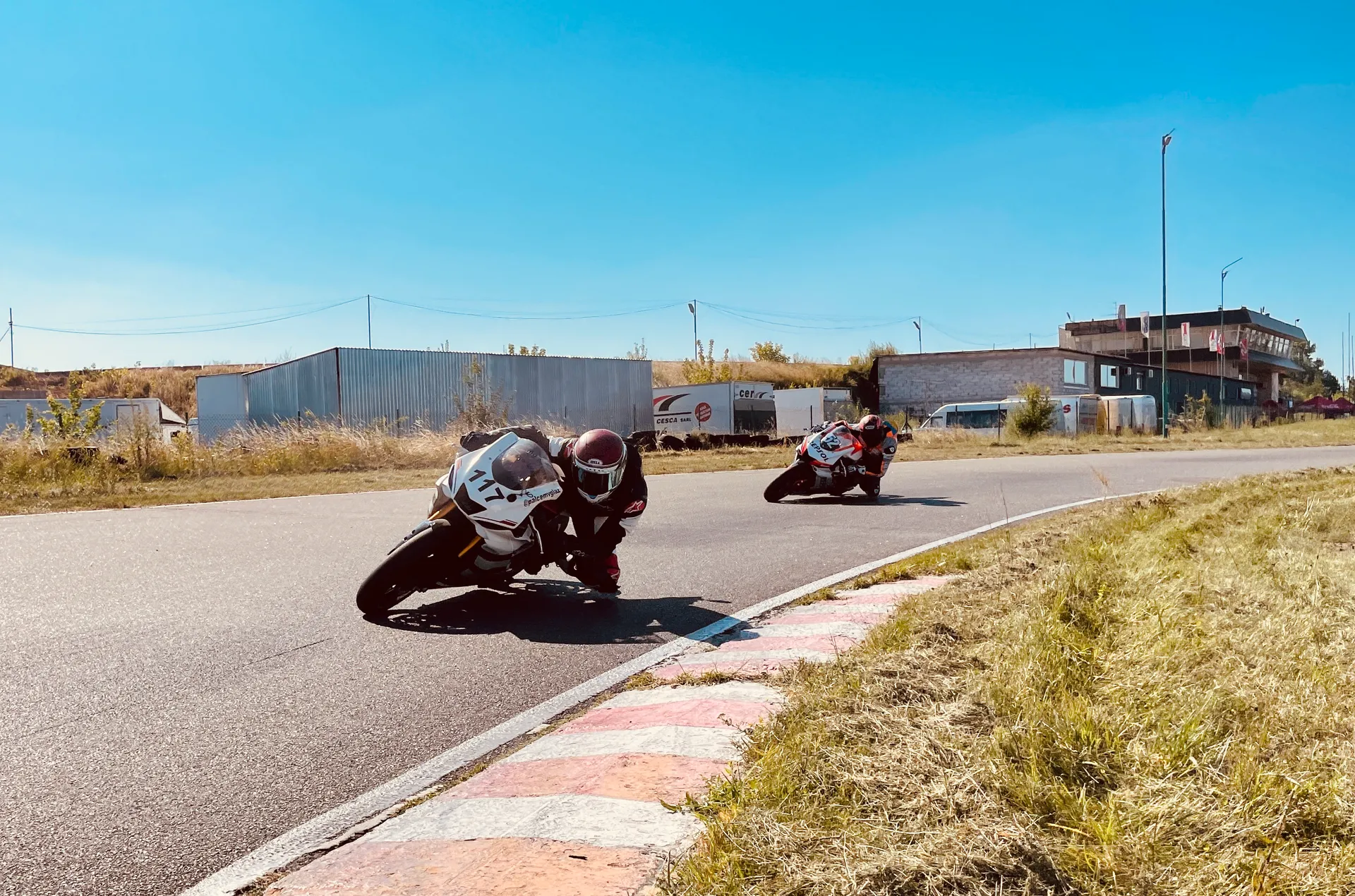
I don't pull the clutch in at the start of braking: I pull it in at the end, just before a stop. Why, plus downshifting and engine braking.

Why New Riders Crash in Corners—and How You Can Avoid Their Mistakes
Learn why new riders crash in corners and how to avoid their mistakes. Master leaning, trail braking, and wide trajectories to stay safe and in control on any curve.
Why Do New Riders Fear Corners? My Journey and Lessons for Mastering Turns
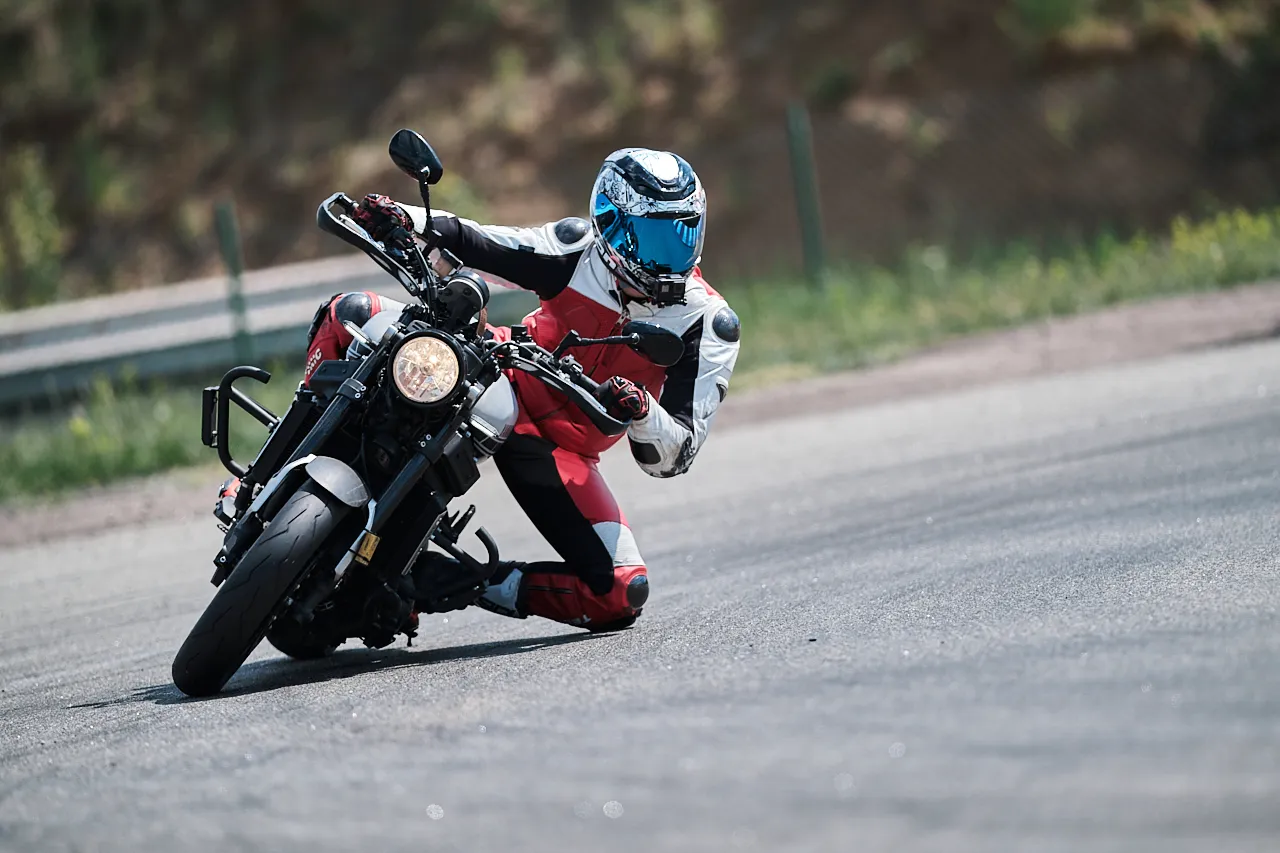
Discover why new riders fear corners and how to overcome it. Personal stories, gymkhana, track, and pit bike training tips to master every turn with confidence.
Common Lane-Splitting Mistakes New Riders Make (And How to Fix Them)
Discover common lane-splitting mistakes new riders make and how to avoid them. Learn slow-speed control, smart positioning, and blocker awareness for safer, stress-free riding.

“8 Common Braking Mistakes That Most Motorcyclists Make—And How to Avoid Them”
Discover the top 8 braking mistakes motorcyclists make and how to fix them. Learn techniques to master emergency braking and reduce your risk of accidents.
“How to Brake a Motorcycle from 60 mph: Master Emergency Braking Techniques”
Master emergency braking on your motorcycle. Learn techniques, avoid common mistakes, and discover how to practice braking for maximum safety