MAIDS: What Europe's Motorcycle Accident Study Found
MAIDS (Motorcycle Accidents In-Depth Study) is a European study of motorcycle accidents: 921 crashes in five EU countries. Here is what it found about the causes: in 50% of cases the primary factor was human error by the car driver, and in more than 70% of those errors the driver failed to see the motorcyclist. 54.3% of the crashes happened at intersections. And a rider in the first months has roughly three times the crash risk of a rider with 8+ years of experience.
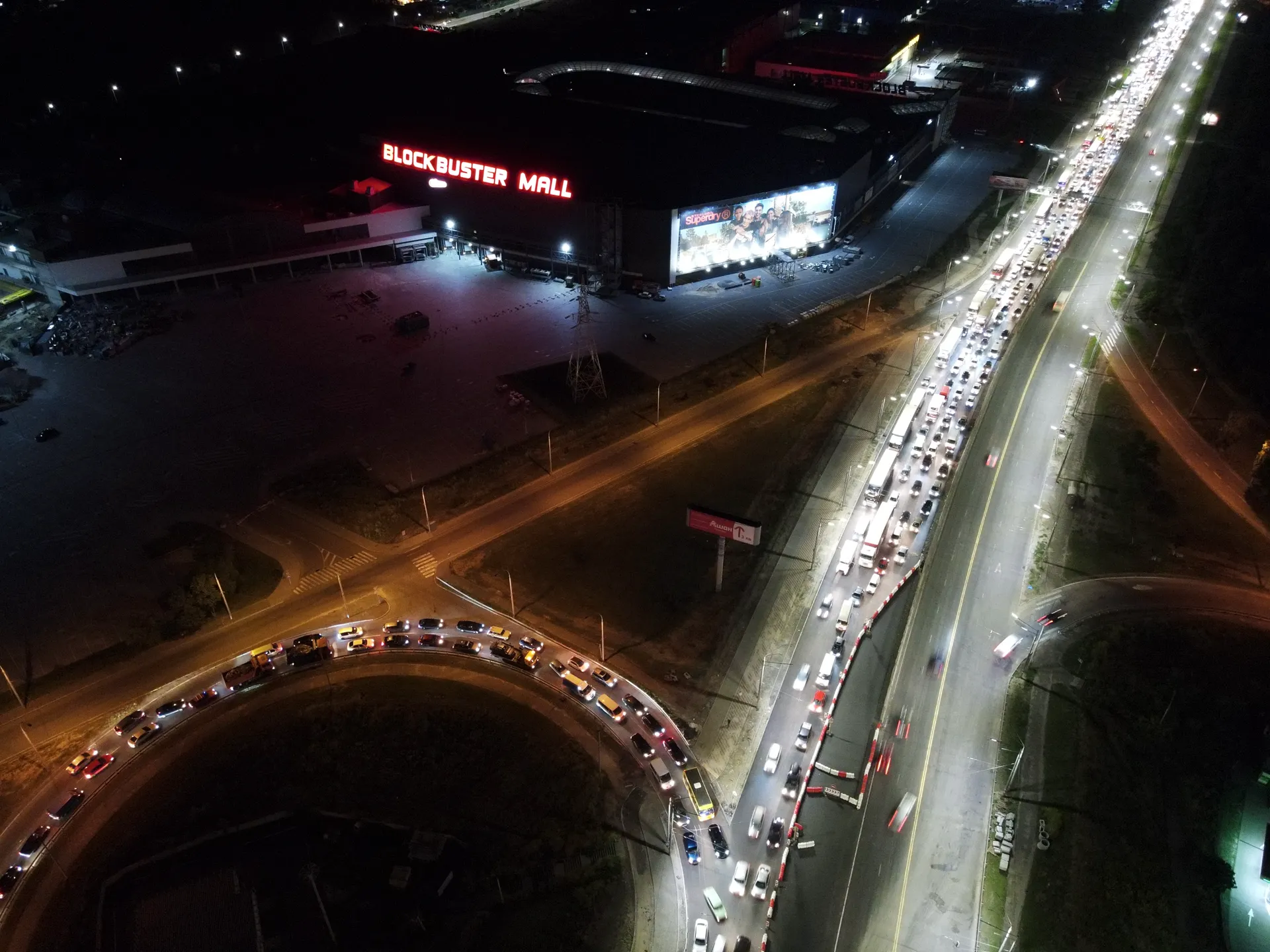
Where motorcycle accidents happen: intersections
More than half of the crashes in the MAIDS sample, 54.3%, happened at intersections. An intersection is where trouble will be waiting for you, and where most of the sketchy moments of your riding career will happen.
Here is how I describe the most typical scenario: the rider is going straight, a car driver turns left across his lane, and it ends in a head-on or side impact. The same principle applies when a car pulls out of a side road.
One more MAIDS number: 90% of all risks to the rider, both from vehicles and from the road, were in front of him before the crash. The danger was almost always ahead, not to the side or behind.
Whose error causes the crash: the car driver's or the rider's
In half of the crashes the primary factor was the car driver's error. Among riders with 8+ years of experience the share is even higher: in 57.9% of cases the car driver was at fault. For inexperienced riders the picture is different: the rider himself was the primary factor in 47.2% of cases, compared with 31.7% for experienced riders.
The speeds involved are usually low: in 74.8% of crashes the motorcycle was going slower than 50 km/h (31 mph) at the moment of impact. I covered this in detail in the article on whether speed is really the main cause of motorcycle crashes.
Why the driver looks and doesn't see
In MAIDS, more than 70% of car driver errors came down to the driver not seeing the motorcyclist. Here is my explanation. When a driver is waiting to turn, what matters to him is not getting hit by a truck or another car. He is looking for something big with two headlights and ignores everything else. He physically sees you, but his brain doesn't register you. He can look straight at you and not see you. Afterwards the driver will say: “I didn't see him.” I explain how this works in the article on perception error.
Why the first months are the riskiest
In MAIDS, riders with up to 6 months of experience made up 7.8% of those who crashed and only 5.2% of the riders in the control group (they were interviewed at gas stations). For riders with 8+ years of experience it is the other way around: 24.0% of the crashes against 46.7% of the control group. That is where “three times” comes from: the risk of a new rider compared with an experienced one. It is specifically about the first months: riders with 7 months to 3 years of experience crashed about as often as their share of the control group would suggest. I described how people go down in their first season in the article on why beginner motorcycle riders crash.
What it looks like on the road
Here is a situation I often visualize. I'm riding straight on the main road with a green light. A van is sitting in the far left lane with its left turn signal on. Suddenly an oncoming car, also turning left, pulls out from behind it. The driver doesn't see me because the van is blocking his view. He hits my leg and breaks it. Luckily, this has never happened to me. I don't have exact statistics, but I'm sure this is the situation that kills and maims. That is my conviction, not MAIDS data.
A new rider in that moment is holding a steady throttle: he has the right of way, so who cares. On a motorcycle that only works for a limited time.
What I take from this
In half of the crashes it is the car driver who makes the error. But if I say “it's not my fault, he broke the rules,” I instantly become someone else's victim. I'm a motorcyclist, and I'm responsible for everything that happens: nobody owes me anything. A crash almost never plays out by the rules, so I expect people to break them. There is a separate article on this: right, but in the hospital.
Coming up to an intersection, I roll off the throttle by default, but not all the way. Two fingers are on the front brake, and I'm ready to brake hard.
How to learn to see a crash before the impact
The danger is usually ahead of you, so the skill of spotting it can be trained on real situations.
I break down real crash videos in the Nebachiv app: intersections, left turns, cars pulling out of side roads. The app also has a game called “Predict the Crash”: you watch a video and learn to spot the danger before the situation turns critical.
Frequently asked questions
Where do motorcycle risk statistics come from?
The numbers in this article come from the MAIDS study: 921 crashes and 923 control-group riders in five EU countries. Most of the data is from Final Report 2.0, some from the MAIDS brochure. I have read MAIDS and the Hurt Report, and I rely on them in this project.
Are there statistics on motorcycle accidents and crashes?
Yes. MAIDS shows where crashes happen (54.3% at intersections), who made the error (in 50% of cases the primary factor was the car driver's error), and why (in more than 70% of those errors the driver didn't see the motorcyclist). Impact speeds are covered in a separate article, linked above.
Is it true that new riders crash three times as often?
The accurate wording is this: a rider in the first months has roughly three times the crash risk of a rider with 8+ years of experience. The comparison is with an experienced rider, not with everyone. And it applies to the first months: in MAIDS, riders with 7 months to 3 years of experience crashed in line with their share of the control group.
App access opens in waves, in the order requests come in
Get early accessLiked it? Share with fellow riders
Read more

Rear Brake on a Motorcycle: When and How to Use It
For me the rear brake is a tool for the city, low speed and slippery surfaces. In an emergency stop on dry pavement I take my foot off it. Why, and how to set up the pedal.
Motorcycle Without ABS: Do You Need It and How to Brake
I recommend getting a bike with ABS: it forgives mistakes, but it doesn't replace skill. Why the wheel locks and how I brake so I don't lock it.

Riding a Motorcycle in the Rain: Braking on Wet Roads
It's slipperiest in the first minutes of rain and when the road is drying. How I brake and open the throttle on wet roads, what I do about markings, manhole covers and rails, and how I practice.
Why Beginner Motorcycle Riders Crash in Their First Season
How beginner motorcycle riders fall in their first season: lost balance at a standstill, a panic grab of the brake on sand, locked wheels. My own falls.
Why Motorcycles Get Rear-Ended at Traffic Lights and in Slowing Traffic
A motorcycle gets rear-ended when the driver behind misses that it's slowing: engine braking shows no brake light. What I do at lights and in traffic.
Is Speed Really the Main Cause of Motorcycle Crashes?
Is speed the main cause of motorcycle crashes? See what MAIDS and NHTSA data show, why speed multiplies rider mistakes, and how to pick your speed in town.